Calcium for Strong Bones, Healthy Muscles and Lifelong Wellbeing:
The Complete Guide
By Lilla Fonyo — Healthy Lifestyle & Longevity Writer
Last Update August 2026
Quick Summary
Calcium is one of the most important minerals in the body. While it is best known for building strong bones and teeth, it also supports muscle function, nerve signalling, blood clotting and a healthy heartbeat. Most adults in the UK need around 700mg of calcium daily, although some people, particularly those at risk of osteoporosis, may benefit from a higher intake under medical guidance. The good news is that most people can get enough calcium through a balanced diet that includes dairy products, leafy greens, fish with edible bones and calcium-fortified foods.
Quinoa: The Small Seed That Does It All - Discover easy quinoa recipes, health benefits and cooking tips in this friendly guide to quick, nutritious meals any time of day.
Gluten-Free Eating: Is It Really Healthier or Just a Trend? - Learn the real science behind gluten-free diets, who needs them, and whether avoiding gluten improves health for most people.
The 30-Plants-a-Week Habit - Discover the easy way to try the “30 plants a week” approach and support your gut health with simple, enjoyable changes.
18 High-Protein Foods to Boost Health and Energy - From chicken and fish to lentils and quinoa, explore 18 high-protein foods that boost strength, energy, and overall health.
Omega-7 Fatty Acids: Benefits, Sources & Heart Health - Learn about omega-7 fatty acids, their health benefits, top food sources like sea buckthorn and how they support heart health.
Top 10 High-Fibre Foods You Should Eat Daily - Discover the top 10 high-fibre foods to boost your health and meet the daily 30g recommendation in the UK!
Fibre Quiz: Test Your Knowledge of High-Fibre Foods - Think you know fibre? Try our quick quiz on high-fibre foods and see how much you know about healthy eating, digestion and gut health.

Why Calcium Matters More Than You Think
When people hear the word calcium, they often think of strong bones. While that is certainly true, calcium's role in the body goes much further.
Around 99% of the body's calcium is stored in bones and teeth, where it helps provide strength and structure. The remaining 1% circulates in the blood and tissues, supporting several vital functions, including:
- Muscle contraction and movement
- Maintaining a regular heartbeat
- Nerve communication
- Blood clotting
- Hormone release
- Normal blood vessel function
Because your body cannot produce calcium on its own, it must come from food or supplements. If your diet does not provide enough calcium, the body takes it from your bones. Over time, this can weaken bones and increase the risk of conditions such as osteoporosis.
The Link Between Calcium and Bone Health
Bones are living tissues that are constantly breaking down and rebuilding. Throughout life, calcium helps maintain bone density and strength.
When calcium intake is too low for long periods, bones gradually lose minerals and become more fragile. This can increase the risk of:
- Osteoporosis
- Osteomalacia (softening of the bones in adults)
- Rickets in children
- Fractures and broken bones
Getting enough calcium throughout life is one of the best ways to support long-term bone health and maintain independence as you age.
How Much Calcium Do You Need?
According to NHS guidance, most adults need:
Adults aged 19 years and over:
- 700mg per day
Some healthcare professionals may recommend around 1,000mg daily for people at increased risk of osteoporosis or those receiving osteoporosis treatment.
Children and teenagers require different amounts because their bones are still developing.
Pregnant women generally require the same daily calcium intake as other adults unless advised otherwise by their healthcare team.
The Best Calcium-Rich Foods
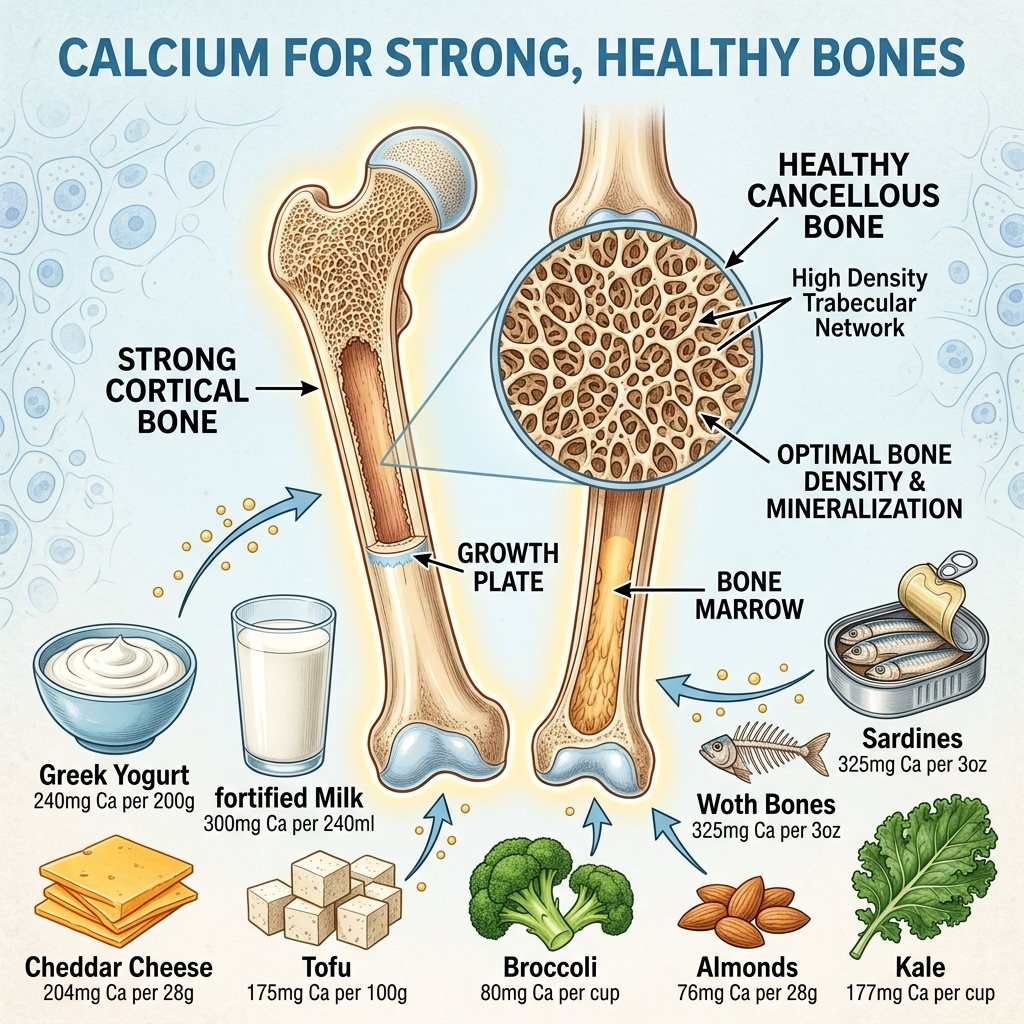
Food should always be the first choice for meeting your daily calcium needs. Fortunately, there are plenty of delicious options.
Dairy Foods
Dairy products are among the richest and most easily absorbed sources of calcium.
Examples include:
- Milk
- Cheese
- Yoghurt
- Cottage cheese
- Kefir
Even low-fat dairy products provide similar amounts of calcium to full-fat versions.
Leafy Green Vegetables
Many vegetables can contribute to your calcium intake, including:
- Kale
- Broccoli
- Watercress
- Pak choi (bok choy)
- Cabbage
- Okra
Although spinach contains calcium, it also contains compounds called oxalates that reduce how much calcium your body can absorb.
Fish with Edible Bones
Small fish with soft edible bones are excellent calcium sources.
Examples include:
- Sardines
- Pilchards
- Canned salmon
These foods also provide healthy omega-3 fats and protein.
Fortified Foods
Many foods now have calcium added to them.
Look for:
- Fortified plant-based milks
- Calcium-set tofu
- Fortified breakfast cereals
- Fortified breads
- Fortified orange juice
Always check nutrition labels to see how much calcium has been added.
Other Good Sources
Additional calcium-rich foods include:
- Almonds
- Sesame seeds
- Chia seeds
- White beans
- Edamame beans
- Dried figs
- Tofu
These options can be especially helpful for people following vegetarian or vegan diets.
Calcium and Vitamin D: The Perfect Partnership
Calcium and vitamin D work together.
Vitamin D helps your body absorb and use calcium effectively. Without enough vitamin D, your body cannot utilise calcium as efficiently, regardless of how much calcium you consume.
Good sources of vitamin D include:
- Safe sunlight exposure
- Oily fish such as salmon and mackerel
- Fortified foods
- Vitamin D supplements when recommended
For healthy bones, it is important to ensure you are getting adequate amounts of both nutrients.
Do You Need a Calcium Supplement?
Most people can meet their calcium requirements through food alone. However, supplements may be helpful if you:
- Avoid dairy products
- Follow a vegan diet
- Have lactose intolerance
- Have digestive conditions that affect absorption
- Have osteoporosis or are at high risk of bone loss
- Struggle to get enough calcium from food
The two most common forms are:
Calcium Carbonate
- Contains a higher percentage of calcium
- Best taken with food
- Widely available
Calcium Citrate
- Absorbed well with or without food
- Often easier on digestion
- May be preferable for people with stomach sensitivity
Always follow the recommended dose and seek advice from a healthcare professional before starting supplements.
Can You Have Too Much Calcium?
Yes. More calcium is not always better.
Taking excessive amounts of calcium, particularly through supplements, may cause:
- Stomach pain
- Constipation
- Diarrhoea
- Nausea
- Kidney stones
The NHS advises that taking more than 1,500mg of calcium daily from supplements may be harmful.
Remember that many multivitamins and combination supplements also contain calcium, so check labels carefully.
Practical Tips to Maintain Healthy Calcium Levels
Keeping your calcium intake consistent can be easier than you think.
Spread Calcium Throughout the Day
Your body absorbs calcium more efficiently in smaller amounts rather than very large doses at once.
Include Calcium at Every Meal
Simple ideas include:
- Yoghurt with breakfast
- Cheese with lunch
- Kale or broccoli with dinner
- Fortified plant milk in tea, coffee or cereals
Check Fortified Products
Plant-based alternatives can vary greatly in calcium content.
Don't Forget Vitamin D
Calcium relies on vitamin D for absorption, so ensure you're getting enough of both.
Stay Active
Weight-bearing exercise such as walking, dancing and strength training helps maintain strong bones.
Signs You May Not Be Getting Enough Calcium
A mild calcium deficiency may not cause obvious symptoms at first.
However, ongoing low calcium intake may contribute to:
- Muscle cramps or spasms
- Tingling sensations
- Brittle nails
- Fatigue
- Reduced bone density
- Increased fracture risk
If you are concerned about your calcium intake or symptoms, seek advice from your GP or healthcare professional.
What the NHS Says About Calcium
The NHS advises that most adults should be able to obtain all the calcium they need through a varied and balanced diet.
Key NHS recommendations include:
- Adults generally need 700mg of calcium daily
- Dairy products are excellent calcium sources
- Leafy green vegetables and fortified foods can help boost intake
- Fish with edible bones provide significant amounts of calcium
- Avoid taking excessive calcium supplements
- Taking more than 1,500mg a day from supplements may be harmful
- A balanced diet should be the primary source of calcium whenever possible
For personalised guidance, especially if you have osteoporosis, kidney disease or digestive conditions, consult your GP or specialist healthcare team.

Takeaway
Calcium is essential for much more than healthy bones. It supports muscle contraction, nerve function, blood clotting and heart health throughout your life. Most people can get all the calcium they need from a varied diet that includes dairy foods, leafy greens, fish with edible bones and fortified products. When diet alone is not enough, supplements may help, but more is not always better. Combining adequate calcium with vitamin D, regular exercise and healthy lifestyle habits is one of the most effective ways to protect your bones and overall wellbeing for years to come.
❓ FAQ – Calcium
What is calcium and why is it important?
Calcium is the most abundant mineral in the body. It helps build and maintain strong bones and teeth, supports muscle function, regulates nerve signals and helps blood clot normally.
How much calcium do adults need each day?
According to NHS guidance, most adults need around 700mg of calcium per day.
What are the best sources of calcium?
Some of the best calcium-rich foods include milk, yoghurt, cheese, kale, broccoli, sardines, pilchards, calcium-fortified plant milks and calcium-set tofu.
Can vegans get enough calcium?
Yes. Fortified plant milks, tofu, leafy greens, almonds, chia seeds, sesame seeds and beans can all contribute to a healthy calcium intake.
Do calcium supplements strengthen bones?
Calcium supplements can help if dietary intake is low. However, they are most effective when used to meet, rather than exceed, your daily calcium needs.
Can you take too much calcium?
Yes. High doses, especially from supplements, can cause digestive problems and increase the risk of kidney stones.
Why is vitamin D important for calcium absorption?
Vitamin D helps the body absorb and use calcium efficiently. Without enough vitamin D, calcium absorption is reduced.
Is milk the only good source of calcium?
No. While milk is one of the best-known sources, many non-dairy foods such as fortified plant drinks, tofu, kale, sardines and almonds also contain calcium.
This content is for educational purposes and does not replace medical advice…
About the author
Lilla Fonyo is a healthy lifestyle and longevity writer with a background in endurance running, nutrition, and mindful living. She focuses on sustainable habits that support long-term physical and mental wellbeing.
Sources:
www.nhs.uk - Calcium - Vitamins and minerals
www.theros.org.uk – Calcium
www.niams.nih.gov - Calcium and Vitamin D: Important for Bone Health
www.bonehealthandosteoporosis.org - Calcium and Vitamin D
www.healthline.com - Top 15 Calcium-Rich Foods – Including Many Nondairy Options