Best Exercises for Longevity:
Simple Ways to Stay Strong, Active, and Healthy for Life
How strength training, cardio, balance, and mobility exercises can support healthy ageing and improve your quality of life.
By Lilla Fonyo — Healthy Lifestyle & Longevity Writer
Last Update May 2026
Quick Summary
Exercise is one of the most effective ways to improve both lifespan and healthspan — the number of years you stay healthy, mobile, and independent. Research shows that a combination of strength training, cardiovascular exercise, balance work, and flexibility training can help protect your heart, muscles, bones, and brain as you age.
Exercises such as assisted chin-ups, Bulgarian split squats, farmer’s carries, brisk walking, swimming, yoga, and resistance training all support long-term health. Even moderate movement done consistently can lower the risk of chronic disease, improve posture and balance, boost metabolism, and help maintain independence later in life.
Related Articles:
Strength Training for Over 40s: Build Muscle & Protect Health - Strength training for over 40s made simple. Build muscle, protect bones, boost heart health and stay strong with expert-backed advice.
The Benefits of Squats: Why You Should Add Them to Your Routine - Learn why squats matter, which muscles they work, how to squat safely, and the top benefits for strength, mobility and injury prevention.
How Strength Training Boosts Brain Power - Discover how strength training improves memory, focus, and brain health while reducing stress and boosting mental performance.
Step Aerobics Benefits: Why Step Workouts Are Great for Weight Loss, Strength, and Heart Health - Discover step aerobics benefits for weight loss, heart health and fitness — now with expert advice, backed by NHS guidance and research.
Low-Impact Exercise - Gentle Movement That Still Gets Results - Discover the benefits of low-impact exercise and how gentle workouts can improve strength, mobility, mood and long-term health.
Asian Pilates: The Gentle Fitness Trend - Discover Asian Pilates — a mindful blend of classical Pilates, Tai Chi, and yoga that builds strength, balance, and inner calm.
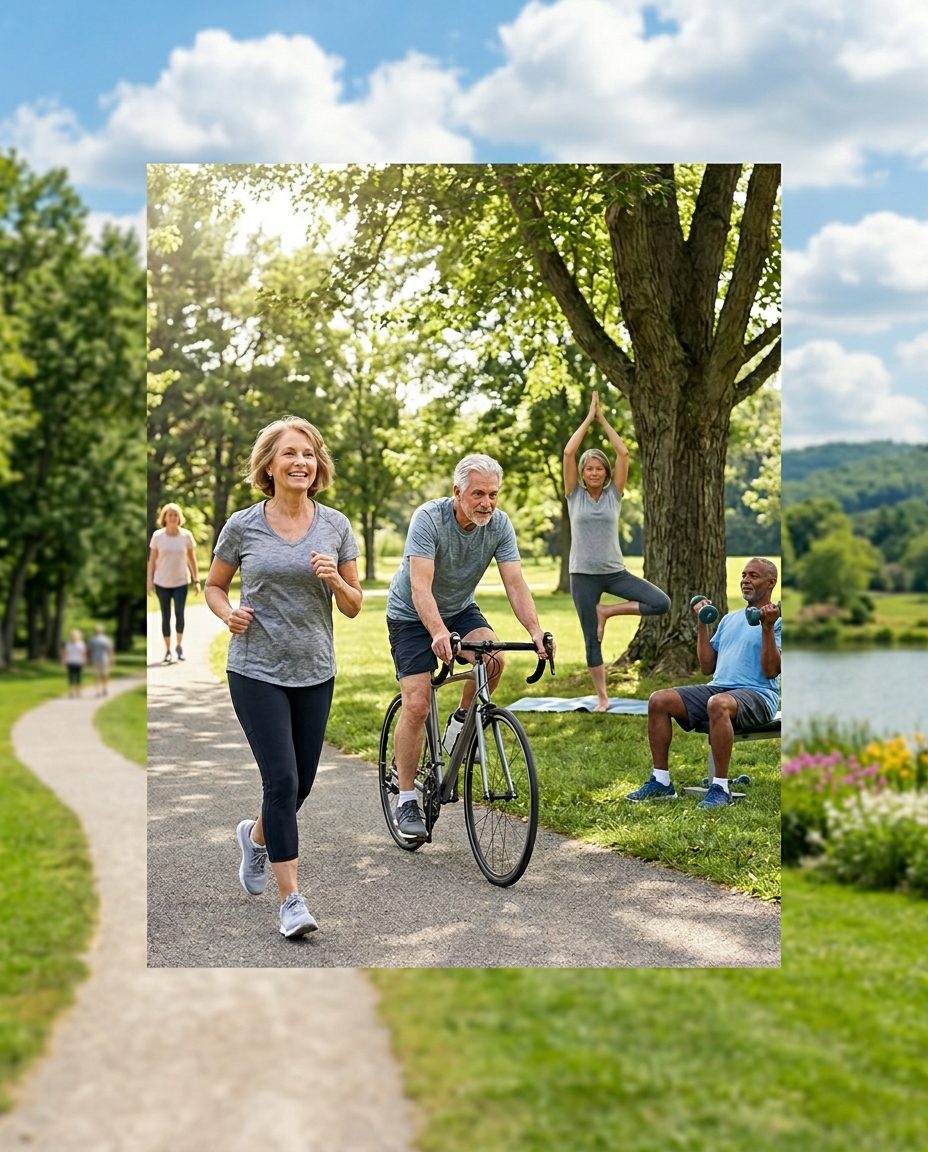
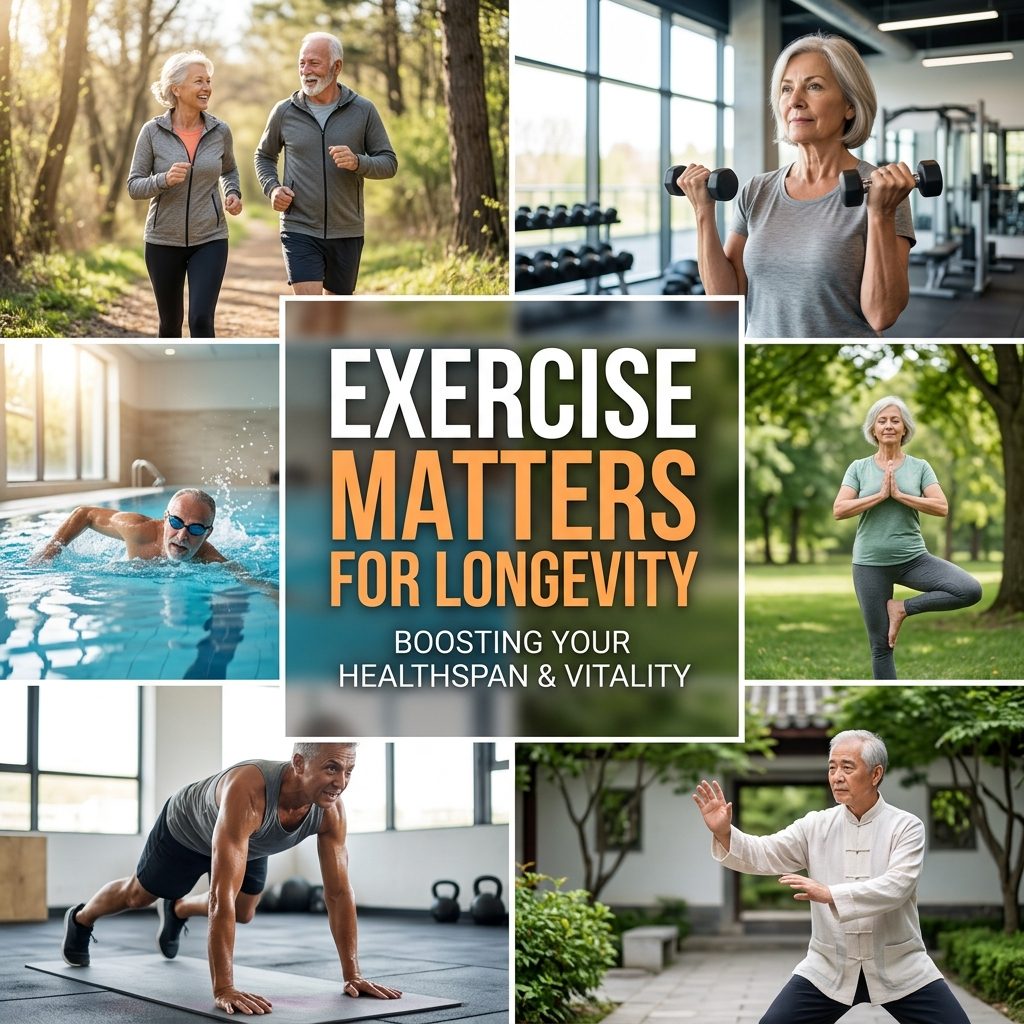
Why Exercise Matters for Longevity
Longevity is no longer just about living longer — it is about living well for longer. Experts now focus on both lifespan and healthspan, meaning the years you remain physically active, mentally sharp, and free from major illness.
Regular exercise helps to:
- Maintain muscle mass and strength
- Improve heart and lung health
- Support healthy blood sugar levels
- Strengthen bones and joints
- Improve posture and mobility
- Reduce the risk of falls
- Support cognitive function and mental wellbeing
- Lower inflammation in the body
Research consistently shows that physically active people have a lower risk of heart disease, type 2 diabetes, dementia, osteoporosis, and early death.
The Best Exercises for Longevity
1. Assisted Chin-Ups
Why They Help
Assisted chin-ups are excellent for upper-body strength, posture, grip strength, and shoulder health. They work multiple muscle groups at once, including the back, arms, shoulders, and core.
Grip strength, in particular, has been strongly linked to healthy ageing and longevity.
How to Do an Assisted Chin-Up
- Set a bar at chest height.
- Sit underneath the bar and grip it with palms facing towards you.
- Keep your feet on the floor for support.
- Pull yourself upwards until your chin reaches the bar.
- Slowly lower yourself back down.
You can also use resistance bands or assisted machines to make the movement easier.
Key Benefits
- Improves posture
- Builds upper-body strength
- Supports shoulder stability
- Enhances grip strength
- Strengthens core muscles
2. Bulgarian Split Squats
Why They Help
Bulgarian split squats are one of the best lower-body exercises for longevity because they improve strength, balance, coordination, and stability.
Single-leg exercises are especially important as we age because they help prevent falls and correct muscle imbalances.
How to Do a Bulgarian Split Squat
- Stand in front of a bench or sturdy surface.
- Place one foot behind you on the bench.
- Lower your back knee towards the floor.
- Keep your chest upright and hips square.
- Push through your front foot to return to standing.
Key Benefits
- Strengthens legs and glutes
- Improves balance and coordination
- Supports hip and knee health
- Helps reduce back pain
- Improves mobility and stability
3. Farmer’s Carries
Why They Help
Farmer’s carries are simple but incredibly effective. Carrying weights while walking strengthens the whole body while also improving posture, grip strength, and cardiovascular fitness.
How to Do a Farmer’s Carry
- Hold a dumbbell or kettlebell in each hand.
- Stand tall with your shoulders back.
- Tighten your core muscles.
- Walk slowly and steadily while carrying the weights.
Key Benefits
- Strengthens the entire body
- Improves grip strength
- Builds joint stability
- Supports posture
- Raises heart rate safely
- Improves balance and coordination
Other Excellent Exercises for Healthy Ageing
Brisk Walking
Walking remains one of the simplest and most effective forms of exercise for longevity. Research suggests that regular brisk walking can reduce the risk of heart disease, diabetes, dementia, and early death.
Aim for at least 30 minutes most days of the week.
Resistance Training
Strength training becomes increasingly important with age because muscle mass naturally declines over time.
Resistance training can include:
- Dumbbells
- Resistance bands
- Bodyweight exercises
- Machines
- Kettlebells
Benefits include:
- Better bone density
- Improved metabolism
- Increased independence
- Reduced risk of falls
- Better blood sugar control
Swimming
Swimming is ideal for people who want a low-impact workout that is gentle on the joints.
It supports:
- Cardiovascular health
- Muscle endurance
- Joint mobility
- Recovery and flexibility
Water-based exercise is particularly helpful for people with arthritis or chronic joint pain.
Interval Training (HIIT)
High-intensity interval training involves short bursts of hard work followed by recovery periods.
Studies show HIIT may improve:
- VO2 max
- Heart health
- Blood sugar control
- Endurance
- Metabolic health
A simple example:
- 30 seconds of fast exercise
- 90 seconds of recovery
- Repeat 6–8 times
Yoga and Mobility Training
Yoga supports healthy ageing by improving:
- Flexibility
- Balance
- Joint health
- Mental wellbeing
- Stress management
It may also reduce injury risk and improve overall mobility.
Balance Training
Balance naturally declines with age, increasing the risk of falls and injury.
Exercises that improve balance include:
- Standing on one leg
- Tai chi
- Heel-to-toe walking
- Stability exercises
- Yoga
Better balance helps maintain confidence and independence.
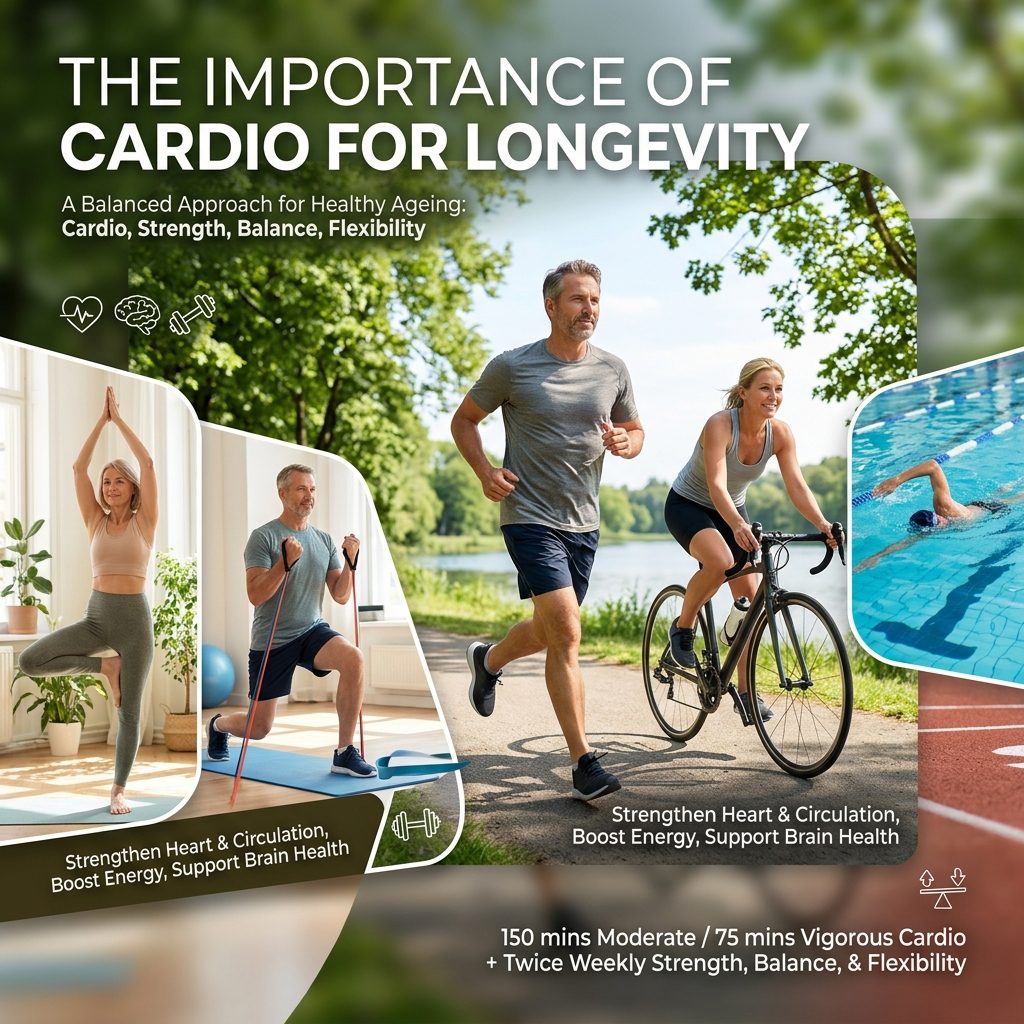
The Importance of Cardio for Longevity
Strength training is essential, but cardiovascular exercise also plays a major role in healthy ageing.
Cardio exercise helps:
- Strengthen the heart
- Improve circulation
- Increase energy levels
- Support brain health
- Reduce stress
- Improve sleep quality
Experts recommend combining:
- Moderate-intensity cardio
- Strength training
- Balance work
- Flexibility training
This balanced approach offers the greatest long-term health benefits.
How Much Exercise Do You Need?
According to current health recommendations, adults should aim for:
- At least 150 minutes of moderate-intensity exercise per week
or - 75 minutes of vigorous exercise per week
In addition:
- Strength training should be performed at least twice weekly
- Balance and flexibility exercises should also be included regularly
- Long periods of sitting should be reduced where possible
Even small amounts of daily movement can improve health outcomes.
Recovery Matters Too
Exercise is only part of the equation. Recovery plays a major role in longevity as well.
Important recovery habits include:
- Getting enough sleep
- Managing stress
- Staying hydrated
- Eating a balanced diet
- Allowing muscles time to recover
Consistency matters more than perfection. Regular movement over many years provides the greatest benefits.
What PubMed Research Says About Exercise and Longevity
Research published through PubMed highlights that evidence-based exercise can significantly improve healthy ageing and reduce the burden of age-related disease.
Key findings include:
- Exercise helps slow physical and cognitive decline
- Progressive resistance training improves muscle strength and independence
- HIIT and aerobic training support cardiovascular health
- Exercise can reduce inflammation and improve mitochondrial function
- Multicomponent training improves resilience and reduces frailty
- Tailored exercise programmes improve long-term adherence and outcomes
Researchers also stress that exercise should become a core part of routine healthcare for older adults, rather than simply an optional lifestyle recommendation.
What the NHS Recommends
According to the National Health Service, older adults should:
- Be physically active every day
- Do strength, balance, and flexibility exercises at least twice weekly
- Aim for 150 minutes of moderate activity weekly
- Reduce long periods of sitting
The NHS also notes that activities such as walking, swimming, yoga, cycling, gardening, and resistance exercises all contribute to better long-term health and independence.
Takeaway
Exercise is one of the most powerful tools for improving both lifespan and quality of life. Strength training, walking, balance work, swimming, interval training, and mobility exercises can all help you stay healthier, stronger, and more independent as you age.
You do not need expensive equipment or complicated routines to benefit. Simple, consistent movement done regularly is often the most effective approach.
The key is to build a balanced routine that includes strength, cardiovascular fitness, flexibility, and recovery — and to keep moving throughout your life.
❓FAQ: Best Exercises for Longevity
What is the best exercise for longevity?
There is no single “best” exercise. Research suggests that combining strength training, cardio, balance work, and flexibility exercises offers the greatest benefits for healthy ageing.
How often should I exercise for healthy ageing?
Most experts recommend at least 150 minutes of moderate exercise per week, along with two strength-training sessions weekly.
Is walking enough to improve longevity?
Brisk walking is excellent for heart health and longevity, especially when done regularly. However, adding strength and balance training provides even greater benefits.
Why is strength training important as we age?
Strength training helps maintain muscle mass, bone density, posture, balance, and independence. It also reduces the risk of falls and supports metabolic health.
Can exercise help prevent dementia?
Research suggests regular physical activity may help protect cognitive function and lower the risk of dementia by improving blood flow, reducing inflammation, and supporting brain health.
What is the safest exercise for older adults?
Walking, swimming, yoga, resistance band exercises, and low-impact strength training are generally safe for most people. Anyone with medical concerns should speak with a GP before starting a new exercise programme.
Is HIIT safe for older adults?
High-intensity interval training can be beneficial when appropriately scaled to fitness level. Beginners should start gradually and seek professional guidance if needed.
Does grip strength really matter for longevity?
Yes. Studies have linked stronger grip strength with better overall health, reduced frailty, and lower risk of early death.
This content is for educational purposes and does not replace medical advice...
About the author
Lilla Fonyo is a healthy lifestyle and longevity writer with a background in endurance running, nutrition, and mindful living. She focuses on sustainable habits that support long-term physical and mental wellbeing.
Sources:
www.womenshealthmag.com - The Best Types Of Exercise For Longevity, According To Experts
www.mensfitness.com - The Best Exercises to Help You Live Longer, According to Science
www.everydayhealth.com - What Exercises Are Best for Boosting Longevity?
www.aarp.org - 10 Types of Exercise That Can Help You Live Longer
www.nhs.uk - Physical activity guidelines for older adults
www.pmc.ncbi.nlm.nih.gov - Evidence-based exercise enhances healthy aging