Walk and talk therapy
A gentle, nature-based approach to counselling and emotional wellbeing
By Lilla Fonyo — Healthy Lifestyle & Longevity Writer
Last Update April 2026
Quick Summary
Walk and talk therapy is a form of counselling that takes place outdoors, often while walking side by side with a therapist. It combines traditional talking therapy with movement and time in nature, helping many people feel more relaxed, open, and able to process their thoughts. It can be especially helpful for those who find indoor therapy intense or restrictive.
The Truth About Midlife Crisis - Discover how to navigate midlife crisis, improve wellbeing and embrace healthy ageing with science-backed insights.
When Is Enough Truly Enough? - Discover how to recognize “enough”, escape the success trap, and build a more meaningful, content life.
Why Job Satisfaction Matters for You - Learn why job satisfaction is essential for mental health, wellbeing and confidence, and how fulfilling work can improve daily life.
How Happiness Impacts Health - Discover how happiness improves health, strengthens relationships and boosts wellbeing, plus simple habits to feel happier every day.
The Simple Formula That Keeps Couples Happy - Psychologists reveal how positive moments during conflict can strengthen relationships using the proven 5:1 communication rule.
Embracing Discomfort for Happiness - Learn how embracing discomfort builds resilience, retrains your brain, and helps you feel happier in a world built for comfort.
The Surprising Secret to Happiness in the Second Half of Life - Harvard happiness expert Dr Arthur Brooks shares how to find lasting joy in midlife by wanting less and focusing on what truly matters.
Emotional Intelligence and Wellbeing - Learn what emotional intelligence is, why it matters more than IQ, and how improving EQ can boost wellbeing, relationships, and success.
Happier? More Satisfied? More fulfilled? - Dynamic of Conditionality - Stop waiting for “someday.” Learn how emotional intelligence helps you feel happier, more satisfied, and fulfilled by taking action today.
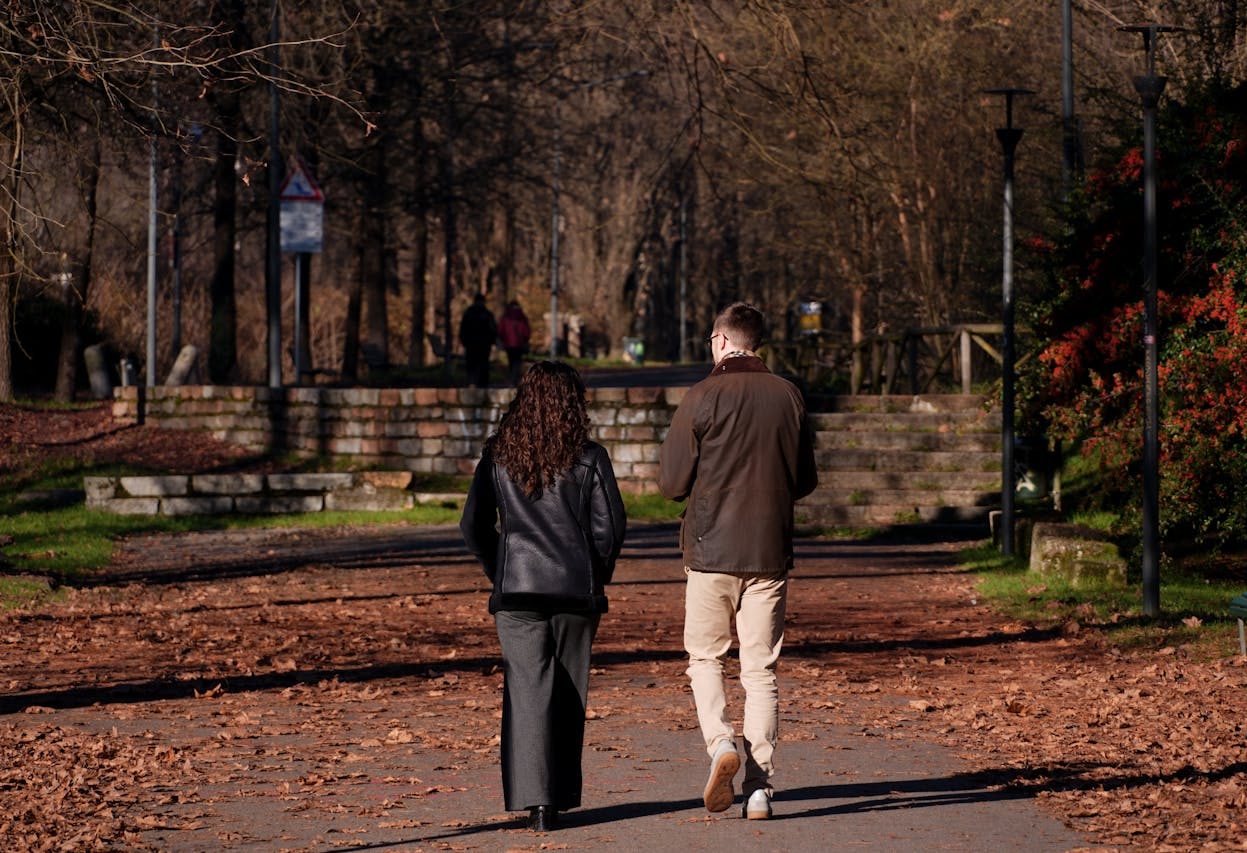
What is walk and talk therapy?
Walk and talk therapy (sometimes called outdoor therapy or ecotherapy) is simply counselling that happens outside instead of in a therapy room. Sessions may take place in parks, woodlands, along coastal paths, or even in quiet urban spaces.
You might walk continuously, pause to sit, or remain seated outdoors—the structure is flexible and guided by your comfort. The core of therapy remains the same: a safe, confidential space to explore your thoughts, feelings, and experiences.
The key difference is the setting. Nature and movement become part of the therapeutic experience, often helping conversations feel more natural and less pressured.
Why being outdoors can make a difference
For many people, the traditional therapy room can feel intense. Sitting face-to-face, maintaining eye contact, and staying still can sometimes make it harder to open up.
Being outdoors can gently shift this dynamic.
Research and clinical experience suggest that combining movement with nature can:
- Reduce stress and anxiety
- Improve mood and energy levels
- Encourage more open and relaxed conversations
- Support clearer thinking and creativity
- Help people feel less “stuck”
Walking side by side can also feel less formal and more equal, which many people find comforting.
The benefits of walk and talk therapy
Walk and talk therapy draws on three powerful elements: talking therapy, physical movement, and nature exposure.
Together, these may help:
- Ease symptoms of anxiety and depression
- Reduce rumination and intrusive thoughts
- Improve emotional regulation
- Support stress management
- Boost self-awareness and confidence
- Help people navigate life transitions (such as loss, career change, or relationship challenges)
Some people also experience a sense of “moving forward” emotionally while physically walking, which can be a powerful metaphor for change.
Who might find it helpful?
Walk and talk therapy can be a good fit if you:
- Feel uncomfortable or anxious in traditional therapy rooms
- Prefer talking while moving rather than sitting still
- Spend a lot of time indoors or at a desk
- Feel stuck in your thoughts or situation
- Enjoy being outdoors or feel calmer in nature
It is commonly used with adults and teenagers and can support a wide range of concerns, including stress, low mood, bereavement, self-esteem, and general wellbeing.
Accessibility and flexibility
Outdoor therapy is not just for people who enjoy long walks. Sessions can be adapted to suit your needs, including:
- Gentle, short routes
- Wheelchair-accessible paths
- Sitting outdoors rather than walking
- Familiar or quieter locations
A good therapist will always discuss your preferences, physical needs, and comfort level beforehand. You are always in control of the pace and format.
Practical considerations
Weather
Sessions usually go ahead in most weather conditions, but flexibility is important. Your therapist may suggest alternatives if conditions are unsafe or uncomfortable.
Confidentiality
Because sessions take place in public or semi-public spaces, confidentiality is discussed in advance. This might include choosing quieter routes or agreeing to pause conversations if others pass by.
Professional boundaries
Even though the setting is more relaxed, professional standards remain exactly the same as indoor therapy. Clear boundaries, confidentiality agreements, and ethical guidelines are always upheld.

What to expect from a session
Typically, you will:
- Meet your therapist at an agreed outdoor location
- Walk at a comfortable pace (or sit, if preferred)
- Talk about whatever feels important to you
- Pause, reflect, or rest whenever needed
Sessions usually last between 30 and 60 minutes, similar to traditional therapy.
Many people describe the experience as feeling more natural, less formal, and deeply grounding.
Is walk and talk therapy right for you?
Walk and talk therapy isn’t for everyone—and that’s completely fine.
It may not suit you if:
- You prefer privacy and predictability indoors
- Outdoor environments feel distracting or overwhelming
- Physical movement feels tiring or uncomfortable
If you’re unsure, speaking with a qualified therapist can help you decide. The most important thing is finding a therapy style that feels safe and supportive for you.
A growing approach backed by research
Evidence from organisations such as American Psychological Association and studies indexed on PubMed suggests that combining movement and nature with therapy can improve wellbeing, reduce distress, and increase emotional openness.
Insights shared by Psychology Today also highlight how outdoor sessions can feel more empowering and collaborative, helping clients build confidence and connection—not just with their therapist, but with their environment.
While research is still developing, early findings are encouraging and continue to support this evolving approach.
Expert perspectives and research sources
American Psychological Association
Research highlights improvements in mood, wellbeing, and self-awareness when therapy is combined with walking and outdoor environments.
PubMed
Clinical studies show walk and talk therapy can reduce anxiety, stress, and psychological distress, with similar or improved outcomes compared to indoor therapy in some cases.
Psychology Today
Experts emphasise the collaborative nature of outdoor sessions, the benefits of “place attachment,” and the calming effect of nature on the nervous system.

Takeaway
Walk and talk therapy offers a simple but powerful idea:
healing doesn’t have to happen in a room.
By combining conversation, movement, and the natural world, it creates a space that many people find calmer, more open, and more human.
If traditional therapy feels overwhelming, this approach might offer a gentler way to begin.
❓ FAQ: Walk and Talk Therapy
Is walk and talk therapy as effective as indoor therapy?
Yes, for many people it can be just as effective. Some studies suggest it may even improve engagement and reduce stress more quickly for certain individuals.
Do I have to be fit to take part?
Not at all. Sessions are tailored to your pace and ability. You can walk slowly, take breaks, or sit outdoors.
What happens if it rains?
Therapists usually plan for different weather conditions. Sessions may continue with appropriate clothing or be rearranged if needed.
Is it confidential if we’re outside?
Yes, but it’s managed differently. Therapists plan routes carefully and may pause conversations if others are nearby.
Can I switch back to indoor therapy?
Absolutely. Therapy should always work for you, and many therapists offer flexible options.
This content is for educational purposes and does not replace medical advice…
About the author
Lilla Fonyo is a healthy lifestyle and longevity writer with a background in endurance running, nutrition, and mindful living. She focuses on sustainable habits that support long-term physical and mental wellbeing.
Expert Review
Reviewed by Andrea Ozorai, Clinical Psychotherapist, providing evidence-based psychological support and counselling.
Beaches Psychotherapy offers a free 15-minute consultation to answer your questions and to discuss the support you need.
Sources:
www.counselling-directory.org.uk - Walk and talk therapy
www.psychologytoday.com - Walk-and-Talk Ecotherapy Sessions Could Change Your Practice
www.bacp.co.uk - Outdoor therapy
www.choosingthearpy.com - Walk & Talk Therapy: Uses, Benefits & How to Start
www.psycnet.apa.org - Walking and talking for well‐being: Exploring the effectiveness of walk and talk therapy.
www.psycnet.apa.org - How to integrate walking therapy into your practice
www.pmc.ncbi.nlm.nih.gov - Walk‐and‐Talk Therapy Versus Conventional Indoor Therapy for Men With Low Mood: A Randomised Pilot Study