Asian Pilates Beginner Flow
A Gentle, Flexible Way to Move, Breathe and Feel Better
By Lilla Fonyo — Healthy Lifestyle & Longevity Writer
April 2026
Quick Summary
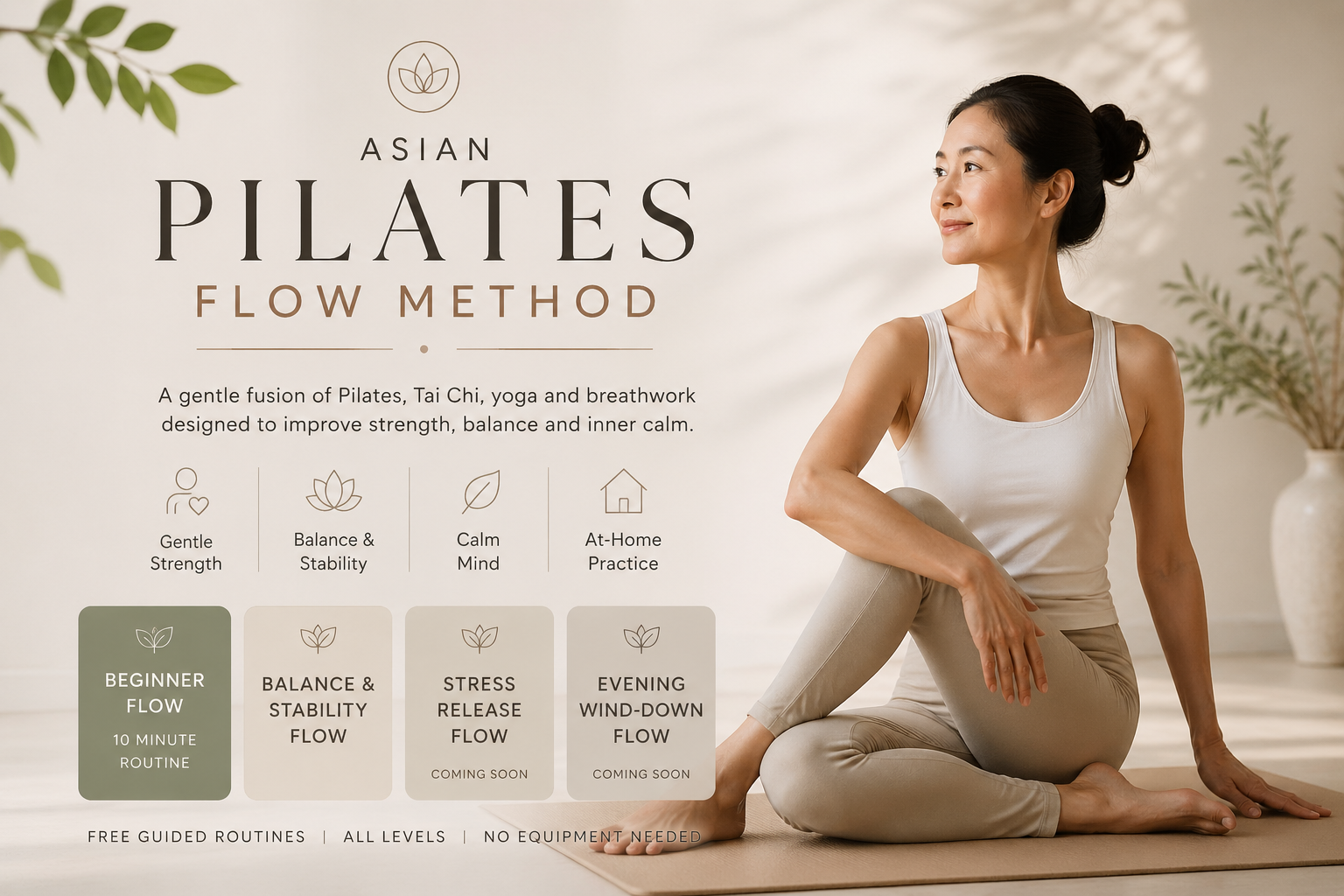
Asian Pilates is a gentle, low-impact movement style that blends elements of Pilates, Tai Chi, yoga, and mindful breathing. There are no strict rules—just a focus on slow, controlled movement, body awareness, and relaxation.
This beginner-friendly routine is designed to help you build strength, improve mobility, and reduce stress in a calm and accessible way.
Related Articles:
Asian Pilates Stress Relief Flow: A Calm, Flowing Workout to Reset Your Body and Mind Naturally - Relax with this Asian Pilates stress relief flow. Gentle moves to calm your mind, reduce tension and restore balance.
Asian Pilates: The Gentle Fitness Trend for Strength and Calm - Discover Asian Pilates — a mindful blend of classical Pilates, Tai Chi, and yoga that builds strength, balance, and inner calm.
Pilates Mental Health Benefits: Reduce Stress, Sleep Better - Discover how Pilates boosts mood, reduces stress, improves sleep and supports mental wellbeing through gentle, mindful movement.
Low-Impact Exercise - Gentle Movement That Still Gets Results - Discover the benefits of low-impact exercise and how gentle workouts can improve strength, mobility, mood and long-term health.
Tai Chi: A Gentle Low-Impact Exercise for Body and Mind - Discover the benefits of Tai Chi, a low-impact exercise that improves balance, reduces stress and supports physical and mental health.
🌿 A Flexible Approach to Movement
Asian Pilates is not a fixed system with strict rules or sequences.
Instead, it’s a blended, flexible approach to exercise that allows you to adapt movements to suit your body, your mood, and the time you have available.
It combines elements from:
- traditional Pilates
- Tai Chi and gentle flowing movement
- breathwork and relaxation techniques
- yoga-inspired stretching
This means there is no “perfect” way to practise.
You are encouraged to move in a way that feels comfortable and natural, while staying mindful of your breathing and posture.
Think of it less as a rigid workout—and more as a guided way to reconnect with your body.
🌿 Try This: 10-Minute Asian Pilates Beginner Flow
If you’re new to this style of movement, this simple routine is a gentle place to begin.
It’s designed to be calm, accessible, and easy to follow at home.
You don’t need any equipment—just a quiet space and a few minutes to yourself.
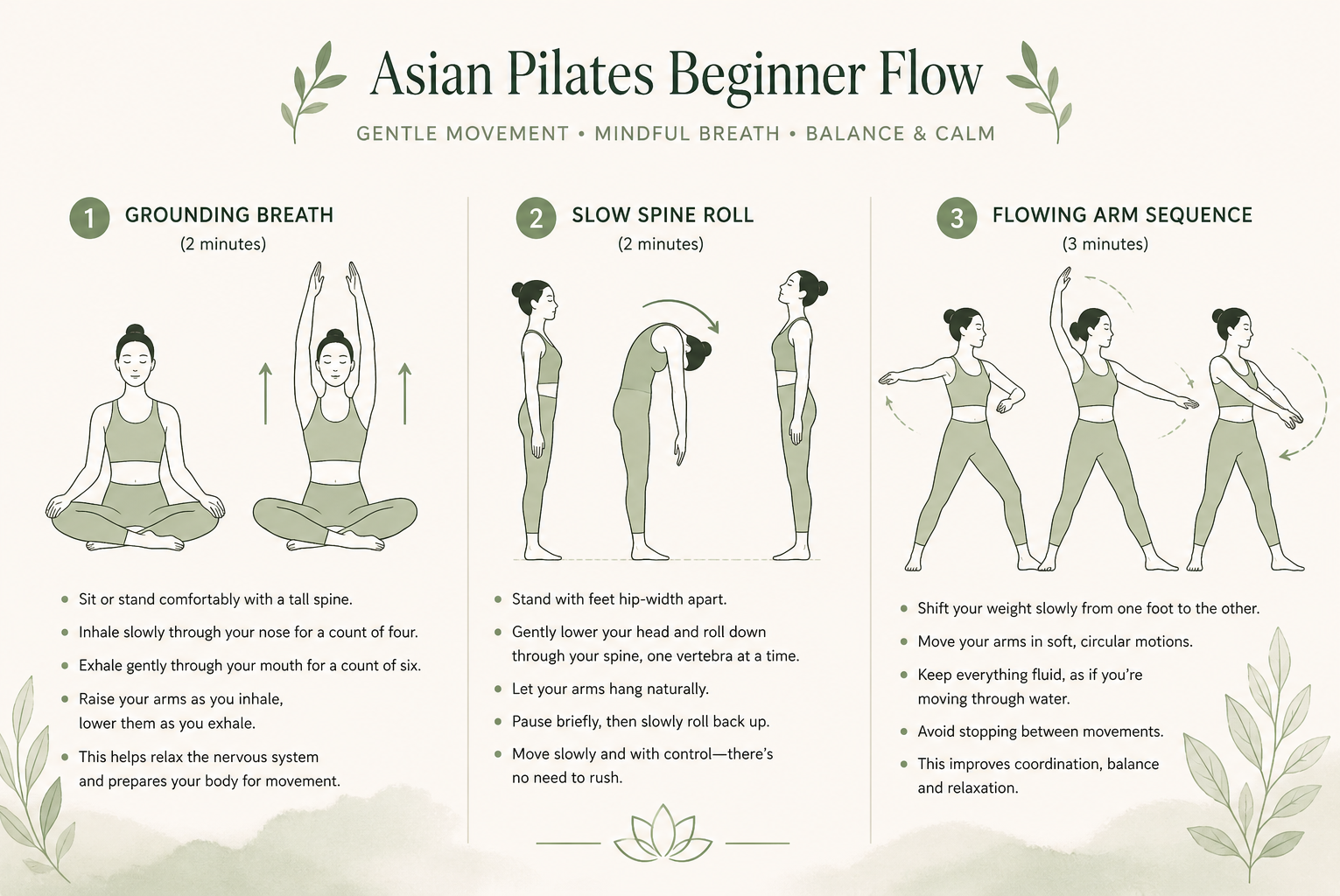
🌱 1. Grounding Breath (2 minutes)
Begin by centring your body and calming your breath.
Stand or sit comfortably with a tall spine.
Inhale slowly through your nose for a count of four.
Exhale gently through your mouth for a count of six.
To add flow, raise your arms slowly as you inhale and lower them as you exhale.
This helps relax the nervous system and prepares your body for movement.
🌱 2. Slow Spine Roll (2 minutes)
Stand with your feet hip-width apart.
Gently lower your head and roll down through your spine, one vertebra at a time.
Let your arms hang naturally.
Pause briefly, then slowly roll back up.
Move slowly and with control—there’s no need to rush.
🌱 3. Flowing Arm Sequence (3 minutes)
Shift your weight slowly from one foot to the other.
At the same time, move your arms in soft, circular motions.
Keep everything fluid, as if you’re moving through water.
Avoid stopping between movements.
This improves coordination, balance, and relaxation.
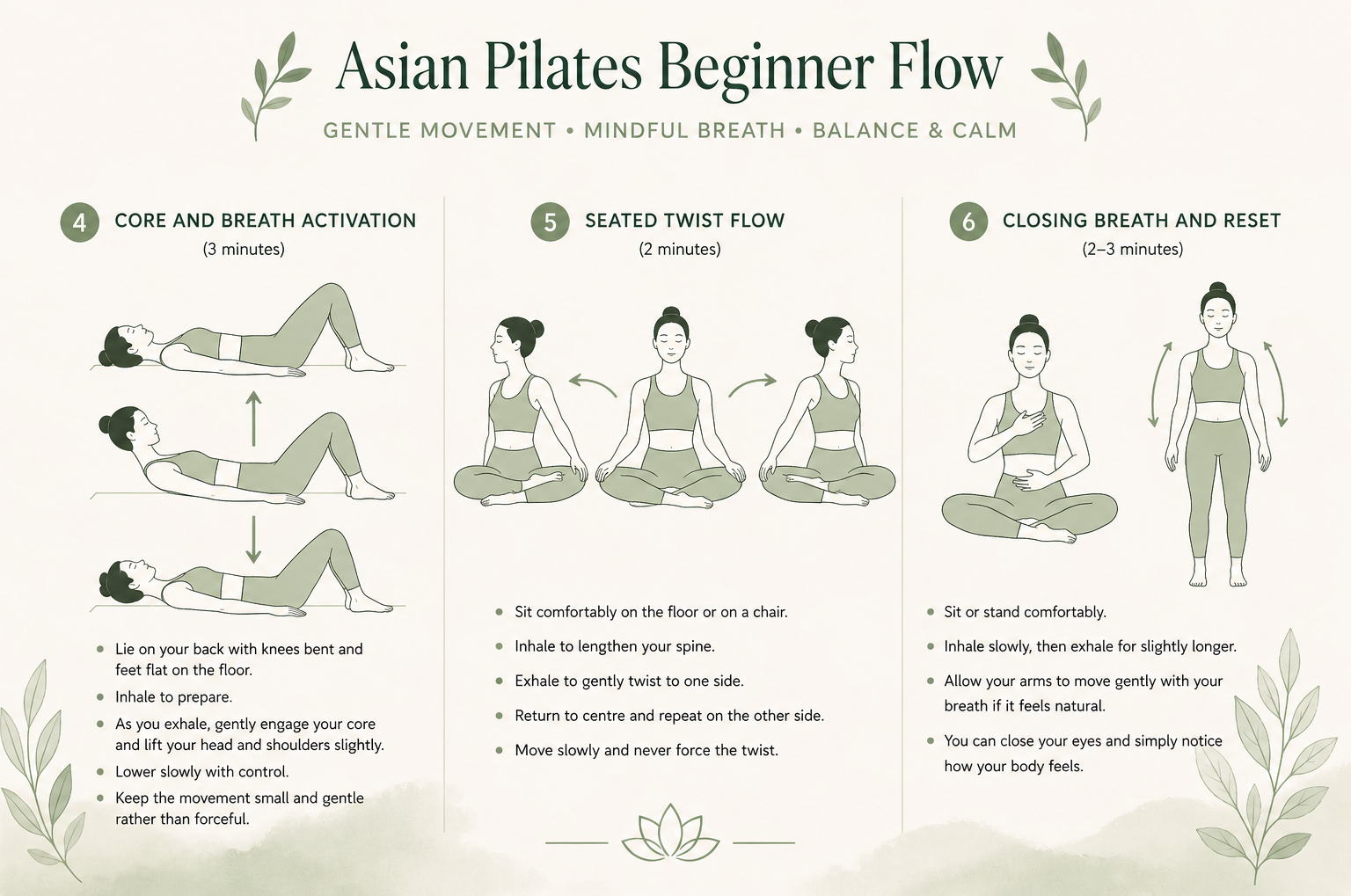
🌱 4. Core and Breath Activation (3 minutes)
Lie on your back with knees bent and feet flat on the floor.
Inhale to prepare.
As you exhale, gently engage your core and lift your head and shoulders slightly.
Lower slowly with control.
Keep the movement small and gentle rather than forceful.
🌱 5. Seated Twist Flow (2 minutes)
Sit comfortably on the floor or on a chair.
Inhale to lengthen your spine.
Exhale to gently twist to one side.
Return to centre and repeat on the other side.
Move slowly and never force the twist.
🌱 6. Closing Breath and Reset (2–3 minutes)
Finish with calm, mindful breathing.
Sit or stand comfortably.
Inhale slowly, then exhale for slightly longer.
Allow your arms to move gently with your breath if it feels natural.
You can close your eyes and simply notice how your body feels.
Takeaway
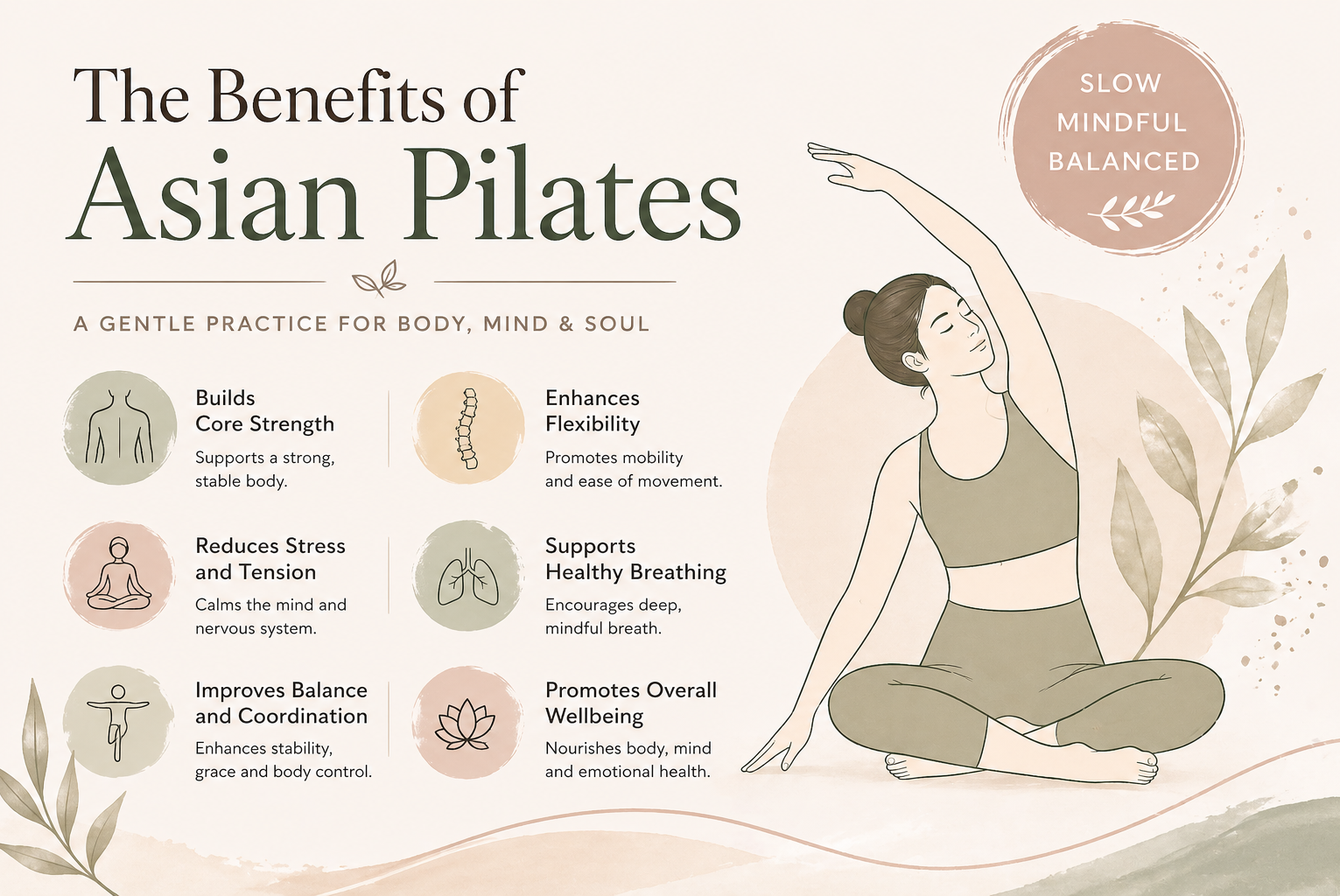
Asian Pilates offers a calm and flexible way to move your body without pressure or strict rules.
By combining gentle strength work, flowing movement, and mindful breathing, it supports both physical and mental wellbeing.
Even a short, simple routine can help you feel more balanced, relaxed, and connected to your body over time.
⚠️ Safety Note
Move within your comfort zone and avoid pain or discomfort.
If you have any injuries or medical conditions, consult a qualified professional before starting a new exercise routine.
❓ FAQ: Asian Pilates for Beginners
Is Asian Pilates suitable for complete beginners?
Yes, it’s designed to be gentle and adaptable, making it ideal for beginners.
Do I need any equipment?
No, just a comfortable space and possibly a mat.
How often should I practise?
Start with 2–3 times per week and adjust as it suits your routine.
Is it similar to yoga?
It shares some elements, but focuses more on core strength and controlled movement.
Can it help with stress?
Yes, the slow pace and breathing techniques can help support relaxation.
Is there a correct way to do it?
There’s no single strict method—focus on comfort, control, and awareness.
This content is for educational purposes and does not replace medical advice…
Some useful links:
30 min beginner Pilates workout
20 min full body Pilates workout
28-day Asian Pilates Challenge
BOOK: Ariel Qiren Chen:
About the author
Lilla Fonyo is a healthy lifestyle and longevity writer with a background in endurance running, nutrition, and mindful living. She focuses on sustainable habits that support long-term physical and mental wellbeing.
Sources:
www.nhs.uk - Benefits of exercise
www.pubmed.ncbi.nlm.nih.gov - Effects of Pilates on Body Posture: A Systematic Review
www.health.harvard.edu - The health benefits of tai chi
www.who.int - WHO guidelines on physical activity and sedentary behaviour