Back Pinched Nerve Exercises:
Gentle Stretches and Movements to Ease Sciatica Pain
By Lilla Fonyo — Healthy Lifestyle & Longevity Writer
Last Update May 2026
Quick Summary
A pinched or trapped nerve in the lower back can cause pain, tingling, numbness, or weakness that often travels down the leg — commonly known as sciatica. In many cases, symptoms improve within a few weeks with gentle movement, stretching, and staying active. Exercises such as knee-to-chest stretches, cat-cow movements, walking, and core strengthening may help reduce pressure on the nerve and support recovery. However, severe symptoms or changes to bladder or bowel control require urgent medical attention.
Related Articles:
Strength Training for Over 40s: Build Muscle & Protect Health - Strength training for over 40s made simple. Build muscle, protect bones, boost heart health and stay strong with expert-backed advice.
The Benefits of Squats: Why You Should Add Them to Your Routine - Learn why squats matter, which muscles they work, how to squat safely, and the top benefits for strength, mobility and injury prevention.
How Strength Training Boosts Brain Power - Discover how strength training improves memory, focus, and brain health while reducing stress and boosting mental performance.
Step Aerobics Benefits: Why Step Workouts Are Great for Weight Loss, Strength, and Heart Health - Discover step aerobics benefits for weight loss, heart health and fitness — now with expert advice, backed by NHS guidance and research.
Low-Impact Exercise - Gentle Movement That Still Gets Results - Discover the benefits of low-impact exercise and how gentle workouts can improve strength, mobility, mood and long-term health.
Asian Pilates: The Gentle Fitness Trend - Discover Asian Pilates — a mindful blend of classical Pilates, Tai Chi, and yoga that builds strength, balance, and inner calm.
Useful Link:
Understanding a Pinched or Trapped Nerve in the Back
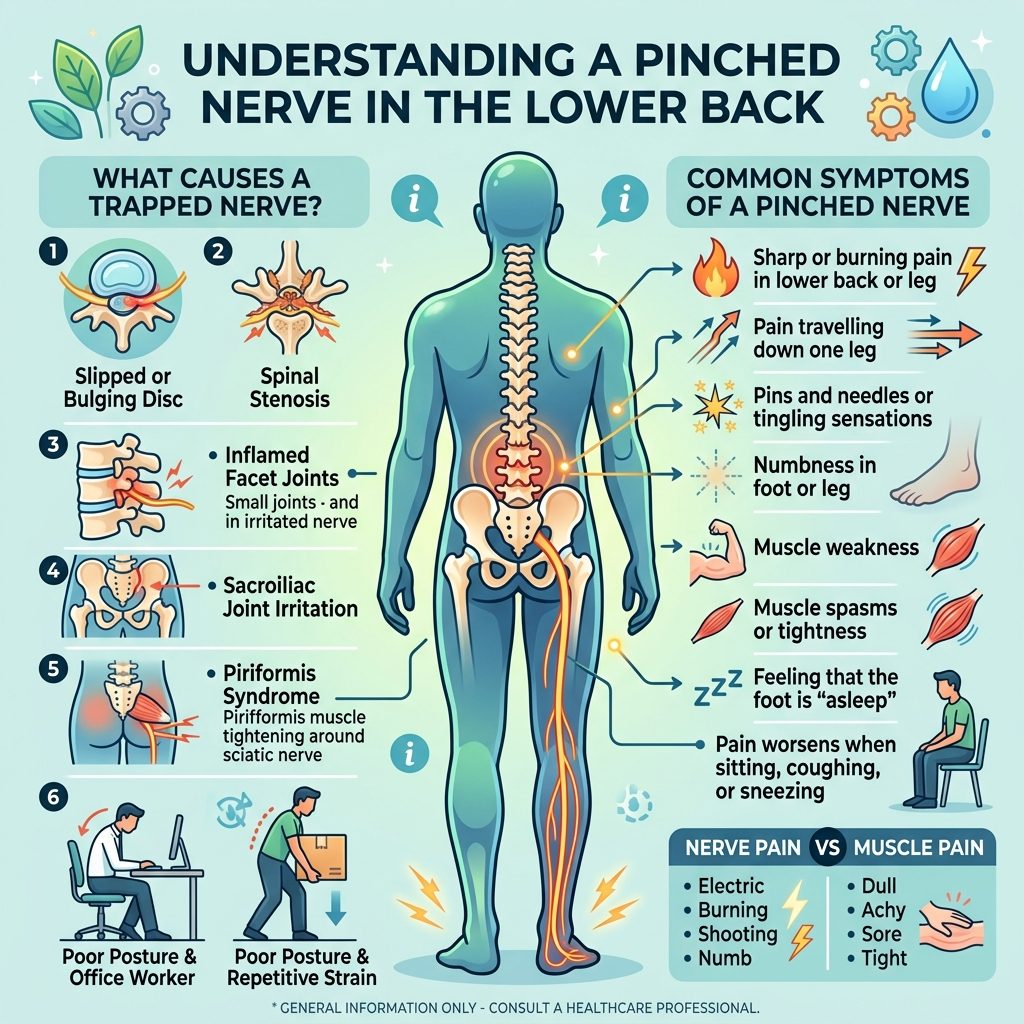
A pinched nerve happens when surrounding tissues — such as discs, muscles, joints, or bones — place pressure on a spinal nerve. This irritation can lead to lower back pain and symptoms that travel into the buttocks, legs, or feet.
You may hear this condition called:
- Sciatica
- Radiculopathy
- Nerve compression
The discomfort can range from mild tingling to sharp, burning pain that affects daily life and movement.
This guide is for general information only and should not replace medical advice from a GP, physiotherapist, or healthcare professional.
Common Symptoms of a Pinched Nerve
A trapped nerve in the lower back may cause:
- Sharp or burning pain in the lower back or leg
- Pain travelling down one leg
- Pins and needles or tingling sensations
- Numbness in the foot or leg
- Muscle weakness
- Muscle spasms or tightness
- A feeling that the foot is “asleep”
- Pain that worsens when coughing, sneezing, or sitting for long periods
Nerve pain often feels different from muscle pain. It may feel electric, burning, shooting, or accompanied by numbness.
What Causes a Trapped Nerve in the Back?
1. Slipped or Bulging Disc
Spinal discs act as cushions between the bones of your spine. If a disc bulges or ruptures, it can press against nearby nerves and trigger pain.
2. Spinal Stenosis
This occurs when the spaces around the spinal nerves narrow, often due to ageing and wear and tear.
3. Inflamed Facet Joints
The small joints in the spine can become irritated or inflamed, placing pressure on nearby nerves.
4. Sacroiliac Joint Irritation
Inflammation where the spine meets the pelvis can sometimes contribute to nerve pain.
5. Piriformis Syndrome
The piriformis muscle in the buttock can tighten or spasm, irritating the sciatic nerve.
6. Poor Posture and Repetitive Strain
Long periods of sitting, poor lifting technique, repetitive movements, and inactivity can all increase pressure on the spine.
How Long Does a Pinched Nerve Last?
For many people, symptoms improve within 6 to 10 weeks as inflammation settles and the nerve recovers.
Recovery time varies depending on:
- The cause of the nerve compression
- Your activity levels
- Muscle strength and flexibility
- Overall spinal health
Some people may experience longer-lasting symptoms, especially if the nerve irritation is severe.
Can Exercise Help a Trapped Nerve?
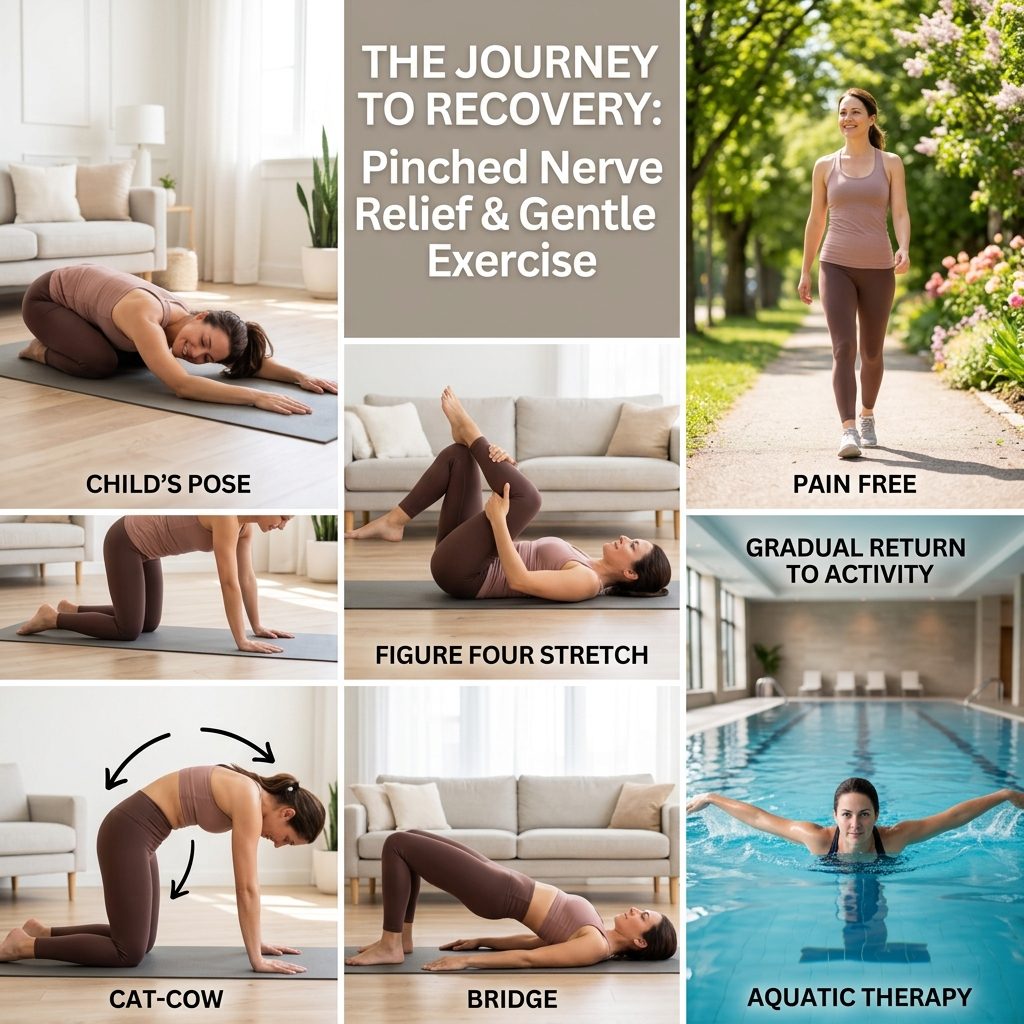
Yes — gentle exercise is often one of the most effective ways to support recovery.
Movement helps to:
- Improve blood flow
- Reduce stiffness
- Strengthen muscles supporting the spine
- Improve flexibility
- Reduce pressure around the nerve
- Prevent future flare-ups
The NHS advises staying active and gradually returning to normal activities rather than resting in bed for long periods.
However, exercises should not cause severe pain. Mild discomfort can be normal when starting gentle movement, but symptoms should gradually improve over time.
Best Exercises for a Pinched Nerve in the Lower Back
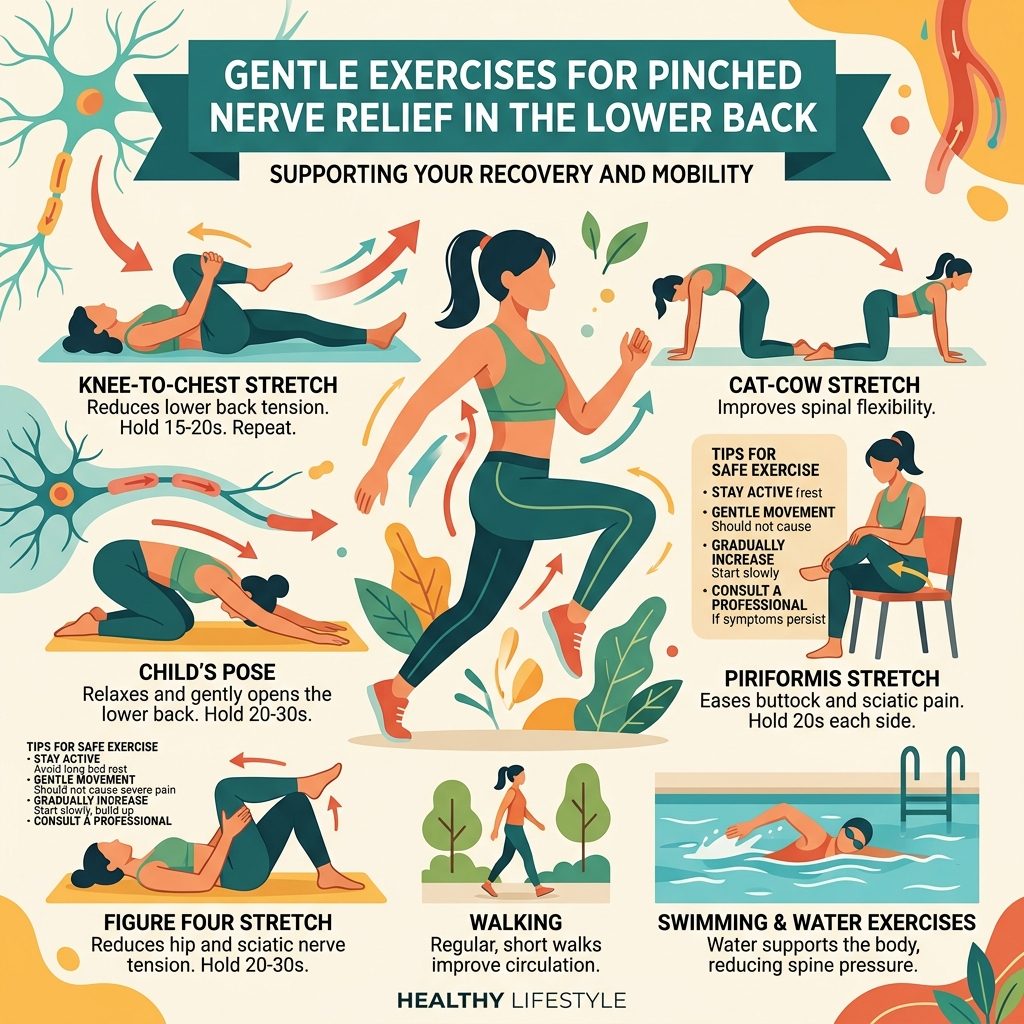
1. Knee-to-Chest Stretch
This gentle stretch can reduce tension in the lower back.
How to do it:
- Lie on your back with knees bent.
- Pull one knee towards your chest.
- Hold for 15–20 seconds.
- Repeat on the other side.
Repeat 5–10 times.
2. Cat-Cow Stretch
This movement improves spinal mobility and flexibility.
How to do it:
- Begin on hands and knees.
- Slowly arch your back upwards (cat position).
- Then lower your stomach and lift your head gently (cow position).
- Move slowly between positions.
Repeat 5–10 times.
3. Child’s Pose
A relaxing stretch that gently opens the lower back.
How to do it:
- Kneel on the floor.
- Sit back onto your heels.
- Stretch your arms forward.
- Rest your forehead down comfortably.
Hold for 20–30 seconds.
4. Piriformis Stretch
Useful for sciatica-type pain and buttock tightness.
How to do it:
- Sit on a chair.
- Place one ankle over the opposite knee.
- Lean forward gently until you feel a stretch in the buttock.
Hold for 20 seconds each side.
5. Figure Four Stretch
This stretch helps reduce tension around the hips and sciatic nerve.
How to do it:
- Lie on your back.
- Cross one ankle over the opposite knee.
- Pull the supporting leg gently towards your chest.
Hold for 20–30 seconds.
6. Back Extensions
Back extensions may help relieve pressure from certain disc-related problems.
How to do it:
- Lie on your stomach.
- Place your hands under your shoulders.
- Gently lift your chest while keeping hips down.
- Hold briefly before lowering.
Repeat slowly 5–10 times.
Stop if symptoms worsen.
7. Pelvic Tilts
Pelvic tilts strengthen deep core muscles and improve spinal support.
How to do it:
- Lie on your back with knees bent.
- Flatten your lower back gently into the floor.
- Tilt the pelvis slightly upwards.
- Relax and repeat.
Repeat 10–15 times.
8. Walking
Gentle walking can improve circulation and keep the spine moving naturally.
Short, regular walks are often more helpful than long periods of rest.
9. Swimming and Water Exercises
Water supports the body and reduces pressure on the spine, making movement easier and less painful.
Swimming, walking in water, or gentle aquatic exercises can be especially helpful.
10. Core Strengthening Exercises
Strengthening the abdominal and hip muscles supports the spine and may reduce future flare-ups.
Helpful exercises include:
- Bridges
- Modified planks
- Abdominal bracing
Start gently and build gradually.
Exercises to Avoid
Avoid exercises or activities that significantly increase pain, tingling, or numbness.
You may need to avoid:
- Heavy lifting
- Twisting movements
- High-impact exercise
- Deep forward bending
- Prolonged bed rest
- Exercises that strain the neck or lower back excessively
If an exercise causes sharp pain, stop immediately.
NHS Advice for Managing Back Pain
The NHS recommends:
Do:
- Stay active where possible
- Continue gentle daily activities
- Use heat or ice packs
- Try gentle stretches and exercises
- Consider walking, swimming, yoga, or Pilates
- Build up activity gradually
Don’t:
- Stay in bed for long periods
- Push through severe pain
- Ignore worsening symptoms
The NHS also advises pacing exercise carefully. Aim to keep discomfort at a manageable level and gradually increase repetitions over time.
When to Seek Medical Advice
Speak to a GP if:
- Pain lasts more than a few weeks
- Symptoms are worsening
- You are struggling with daily activities
- You develop weakness in the leg
- You have unexplained weight loss
- Pain is severe at night
Seek urgent medical help immediately if you experience:
- Loss of bladder or bowel control
- Numbness around the genitals or anus
- Severe weakness in both legs
- Symptoms after a serious accident
- Sudden severe worsening pain
These may be signs of a serious spinal condition requiring emergency treatment.
What Research Says About Exercise and Back Pain
Research published in PubMed and systematic reviews of chronic lower back pain suggest that exercise can help reduce pain and improve function in many people with back problems.
Studies have shown that regular movement and exercise programmes may:
- Reduce lower back pain
- Improve flexibility and movement
- Support long-term spinal health
- Improve strength and stability
- Reduce disability linked to chronic back pain
Exercise appears to be more beneficial than long-term inactivity or bed rest for most people with non-specific lower back pain.
NHS Guidance on Back Pain and Exercise
According to the NHS:
- Most back pain improves within a few weeks
- Gentle movement supports healing
- Staying active is usually better than resting
- Walking, swimming, yoga, and stretching can all help
- Exercises should be introduced gradually
- Mild discomfort can be normal during recovery
If symptoms continue beyond 6 weeks or worsen, professional assessment is recommended.
Takeaway
A pinched nerve in the back can be painful and frustrating, but gentle movement and exercise often play an important role in recovery. Stretches, walking, core strengthening, and mobility exercises can help reduce pressure on irritated nerves and improve flexibility and strength over time.
The key is to stay consistent, move gently, and avoid activities that worsen symptoms. Most people improve gradually within several weeks, but persistent or severe symptoms should always be assessed by a healthcare professional.
❓FAQ: Back Trapped Nerve Exercises
What does a pinched nerve in the lower back feel like?
It often causes sharp, burning, or shooting pain that may travel into the buttock or leg. Tingling, numbness, and weakness can also occur.
Can walking help a trapped nerve?
Yes. Gentle walking may improve circulation, reduce stiffness, and support healing without placing too much strain on the spine.
Should I rest with a pinched nerve?
Short periods of rest may help during severe flare-ups, but prolonged bed rest is usually not recommended. Staying gently active is generally better for recovery.
How long does sciatica usually last?
Many cases improve within 6 to 10 weeks, although some people may experience symptoms for longer.
Can stretching make a pinched nerve worse?
Aggressive stretching or painful movements can worsen symptoms. Exercises should feel gentle and controlled, not sharp or severe.
Is swimming good for lower back nerve pain?
Yes. Water reduces pressure on the spine and allows gentle movement, making swimming and aquatic exercise helpful for many people.
When should I see a doctor?
See a GP if symptoms persist beyond a few weeks, worsen, or cause weakness, numbness, or difficulty carrying out normal activities.
Is a trapped nerve serious?
Most cases improve with time and conservative treatment, but severe symptoms — especially bladder or bowel changes — require urgent medical attention.
This content is for educational purposes and does not replace medical advice...
About the author
Lilla Fonyo is a healthy lifestyle and longevity writer with a background in endurance running, nutrition, and mindful living. She focuses on sustainable habits that support long-term physical and mental wellbeing.
Sources:
www.nhsinform.scot - Exercises for back pain
www.healthcentral.com - 12 Exercises for a Pinched Nerve in the Neck or Lower Back
www.nhs.uk - Back pain
www.activeposture.co.uk - Exercises to Ease a Pinched Nerve in Your Lower Back: Move Better, Feel Better
www.medicalnewstoday.com - What to know about a pinched nerve in the lower back
www.pubmed.ncbi.nlm.nih.gov - Exercise therapy for chronic low back pain