Can Food Increase Oestrogen?
What Every Woman Over 40 Should Know
By Lilla Fonyo — Healthy Lifestyle & Longevity Writer
July 2026
Quick Summary
Many women look for foods that can naturally increase oestrogen levels during perimenopause and menopause. But can food really replace your body's hormones?
The short answer is not exactly.
Certain foods contain phytoestrogens—natural plant compounds that can interact with oestrogen receptors in the body. They don't become human oestrogen, but for some women they may help reduce menopausal symptoms, support bone health and improve heart health when eaten as part of a balanced diet.
In this article, we'll separate myths from facts, explain what the research really says, and show you the best foods to include if you're aiming to support healthy ageing naturally.
Quinoa: The Small Seed That Does It All - Discover easy quinoa recipes, health benefits and cooking tips in this friendly guide to quick, nutritious meals any time of day.
Gluten-Free Eating: Is It Really Healthier or Just a Trend? - Learn the real science behind gluten-free diets, who needs them, and whether avoiding gluten improves health for most people.
What is a plant-based diet - Learn what a plant-based diet is, its health benefits, NHS guidance and simple tips to start eating more plant foods today.
The 30-Plants-a-Week Habit - Discover the easy way to try the “30 plants a week” approach and support your gut health with simple, enjoyable changes.
Top 10 High-Fibre Foods You Should Eat Daily - Discover the top 10 high-fibre foods to boost your health and meet the daily 30g recommendation in the UK!
Fibre Quiz: Test Your Knowledge of High-Fibre Foods - Think you know fibre? Try our quick quiz on high-fibre foods and see how much you know about healthy eating, digestion and gut health.
Why Oestrogen Matters
Oestrogen is much more than a reproductive hormone.
Throughout life it influences many systems in the body, including:
- Bone strength
- Heart health
- Brain function
- Mood
- Skin elasticity
- Muscle maintenance
- Cholesterol balance
- Vaginal and urinary health
As women enter their forties and fifties, natural oestrogen production gradually declines. This change can contribute to symptoms such as:
- Hot flushes
- Night sweats
- Brain fog
- Mood changes
- Sleep problems
- Joint discomfort
- Dry skin
- Loss of bone density
- Increased abdominal fat
These changes are completely normal, but they often encourage women to search for natural ways to support hormone balance.
One of the most common questions is:
Can eating certain foods increase oestrogen?
The answer is more nuanced than many headlines suggest.
Oestrogen vs Phytoestrogens: They're Not the Same Thing
This is where much of the confusion begins.
Many websites claim certain foods are "high in oestrogen."
Technically, that's incorrect.
Plants do not contain human oestrogen.
Instead, they contain phytoestrogens, naturally occurring plant compounds whose chemical structure resembles oestrogen closely enough that they can bind to some oestrogen receptors in the body.
Think of phytoestrogens as a key that fits into the same lock—but not perfectly.
Depending on your existing hormone levels, they may:
- produce a mild oestrogen-like effect
- compete with your own oestrogen
- have very little effect at all
This explains why researchers often describe phytoestrogens as having both oestrogenic and anti-oestrogenic actions.
Rather than "boosting" oestrogen dramatically, they may help support hormonal balance.
What Does the Science Actually Say?
Research has become much stronger over the last decade.
A recent PubMed review analysed dozens of high-quality studies examining natural approaches to supporting oestrogen levels in postmenopausal women.
The researchers concluded that several lifestyle approaches—including phytoestrogen-rich foods—can provide meaningful benefits, especially when combined with regular exercise, stress management and a healthy diet.
Some findings included:
- reductions in hot flush frequency
- improved metabolic health
- better bone health
- improved quality of life
- good safety profile for dietary phytoestrogens
However, the researchers also emphasised that these natural strategies cannot completely replace hormone replacement therapy (HRT) when HRT is medically indicated. Instead, they may provide valuable support for women who cannot or choose not to use hormone therapy.
The Best Foods Rich in Phytoestrogens
Not all phytoestrogen-containing foods are equal.
Different foods contain different plant compounds, including:
- Isoflavones
- Lignans
- Coumestans
- Resveratrol
Each may influence the body slightly differently.
Let's look at the foods with the strongest evidence.
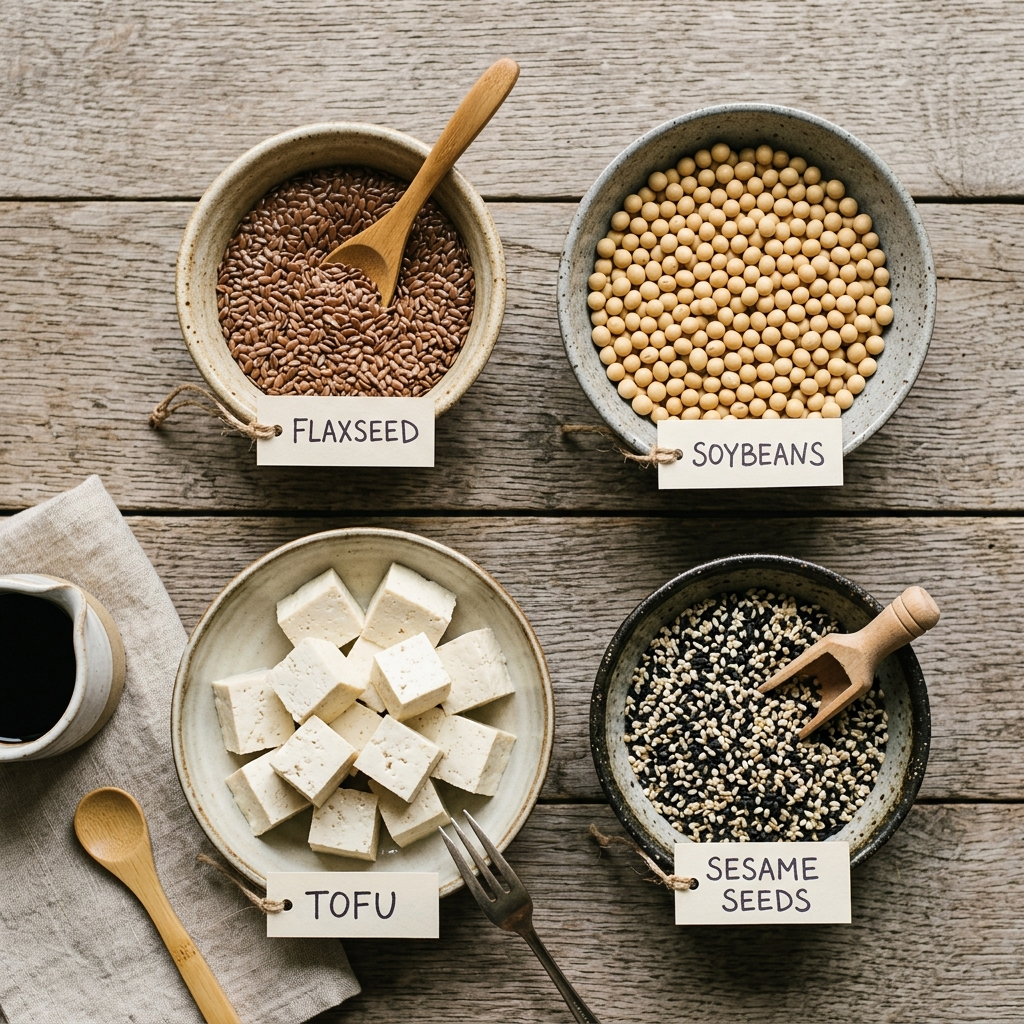
1. Flaxseeds – The Richest Source
If there is one food that consistently appears in research, it's flaxseed.
Flaxseeds contain extremely high levels of lignans, one of the most researched phytoestrogens.
Studies suggest flaxseed may:
- support menopausal symptom relief
- contribute to better heart health
- support healthy cholesterol
- help maintain bone health
- possibly reduce breast cancer risk in postmenopausal women, although more research is still needed.
Easy ways to eat them
- Sprinkle over porridge.
- Add to yoghurt.
- Blend into smoothies.
- Stir into overnight oats.
For best absorption, choose ground flaxseed rather than whole seeds.
2. Soy Foods
Soy is probably the most debated food when discussing hormones.
Soybeans naturally contain isoflavones, another well-studied type of phytoestrogen.
Good choices include:
- tofu
- tempeh
- edamame
- unsweetened soy milk
Research suggests soy may help:
- reduce hot flushes
- improve bone health
- support heart health
- improve cholesterol levels
Interestingly, soy doesn't simply increase oestrogen.
Instead, it appears to help regulate hormone activity depending on an individual's existing hormone status. Researchers continue to investigate exactly how this works.
3. Sesame Seeds
Tiny but incredibly nutritious, sesame seeds are one of the richest dietary sources of phytoestrogens. They also provide healthy fats, fibre, calcium, magnesium and antioxidants.
Emerging research suggests that regularly eating sesame seeds may help support bone health in postmenopausal women and may have a positive effect on cholesterol levels. While some studies have shown encouraging results, more human research is still needed before firm conclusions can be made about their direct effect on oestrogen levels.
Easy ways to enjoy sesame seeds
- Sprinkle over salads.
- Add to stir-fries.
- Mix into homemade granola.
- Use tahini (sesame seed paste) in dressings or hummus.
4. Cruciferous Vegetables
Vegetables such as:
- Broccoli
- Brussels sprouts
- Kale
- Cabbage
- Cauliflower
are nutritional powerhouses.
Interestingly, they contain compounds that can influence the way your body processes oestrogen rather than simply increasing it.
These vegetables are rich in fibre, vitamins, minerals and phytonutrients that are associated with a lower risk of heart disease, certain cancers and chronic inflammation. They also contain naturally occurring phytoestrogens, although in lower amounts than flaxseed or soy.
For women over 40, cruciferous vegetables are worth including several times each week—not because they dramatically raise oestrogen, but because they support overall hormonal health.
5. Berries
Berries are another excellent addition to a menopause-friendly diet.
Strawberries, blueberries, raspberries and blackberries contain small amounts of phytoestrogens alongside:
- Vitamin C
- Fibre
- Anthocyanins
- Polyphenols
These nutrients help protect cells from oxidative stress, which increases as we age.
Although berries won't significantly alter hormone levels, they contribute to a healthy dietary pattern that supports cardiovascular health and healthy ageing.
6. Garlic
Garlic has long been valued for its health benefits.
Research suggests it may:
- support heart health
- help maintain healthy cholesterol levels
- reduce inflammation
- lower blood pressure
Some early studies also suggest garlic may help reduce bone loss associated with declining oestrogen, although most of this research has been carried out in animals. More studies in humans are still needed.
Fortunately, garlic is easy to include in everyday meals and offers many health benefits beyond hormone support.
7. Legumes
Legumes provide much more than plant protein.
Foods such as:
- Lentils
- Chickpeas
- Kidney beans
- Black beans
- Butter beans
contain phytoestrogens alongside fibre, iron and complex carbohydrates.
Eating more legumes may help improve:
- blood sugar control
- cholesterol levels
- digestive health
- satiety
Although they contain smaller amounts of phytoestrogens than soy, they are an excellent choice for women aiming to build a balanced, plant-rich diet.
8. Whole Grains
Whole grains aren't usually the first foods people think about when discussing hormones.
However, grains such as:
- Oats
- Barley
- Rye
- Whole wheat
- Quinoa
contain lignans and other beneficial plant compounds.
Combined with their high fibre content, whole grains may help improve gut health, support healthy cholesterol levels and contribute to better metabolic health during menopause.
9. Nuts
Almonds, pistachios, peanuts and cashews contain modest amounts of phytoestrogens alongside heart-healthy unsaturated fats.
They're also rich in:
- Vitamin E
- Magnesium
- Protein
- Fibre
Nuts are associated with improved heart health, which becomes increasingly important after menopause when the risk of cardiovascular disease begins to rise.
Because they're energy-dense, it's best to enjoy a small handful rather than large portions.
10. Peaches and Other Stone Fruits
Peaches may surprise many people by making the list.
They contain lignans, one of the major classes of phytoestrogens.
Some observational studies suggest women who regularly eat peaches and nectarines may have a lower risk of breast cancer after menopause, although this doesn't prove cause and effect.
Other fruits that contain beneficial phytoestrogens include:
- Apricots
- Plums
- Cherries
These fruits also provide fibre, vitamins and antioxidants that support overall health.
Can Food Really Increase Oestrogen?
This is probably the biggest misconception online.
Many articles claim that eating flaxseed or soy will "boost your oestrogen".
The evidence doesn't support such a simple conclusion.
Phytoestrogens are not human oestrogen. Instead, they interact with oestrogen receptors in complex ways that vary from person to person.
Factors that influence their effect include:
- your age
- gut microbiome
- menopausal status
- genetics
- existing hormone levels
- overall diet
In some women they may produce a mild oestrogen-like effect.
In others, they may actually compete with natural oestrogen.
This is why scientists generally describe phytoestrogens as modulators rather than hormone replacements.
For most healthy women, including these foods as part of a balanced diet is considered safe and may provide several health benefits beyond hormonal support.
Beyond Food: Other Natural Ways to Support Healthy Oestrogen Levels
Nutrition is only one piece of the puzzle.
Research suggests several lifestyle habits can also support hormonal health during midlife.
Stay Physically Active
Regular exercise can help:
- maintain muscle mass
- improve bone strength
- reduce body fat
- improve insulin sensitivity
- reduce stress
- improve sleep quality
Strength training is particularly important after the age of 40 because declining oestrogen accelerates muscle and bone loss.
Manage Stress
Long-term stress increases cortisol production.
Chronically elevated cortisol may disrupt the balance of several hormones, including reproductive hormones.
Simple habits such as:
- walking outdoors
- mindfulness
- yoga
- breathing exercises
- adequate sleep
may all help reduce stress and improve overall wellbeing.
Maintain a Healthy Weight
Very low body fat and excessive body fat can both influence hormone production.
A balanced diet combined with regular physical activity remains the healthiest long-term strategy for supporting hormonal balance.
Don't Forget Vitamin D and Calcium
As oestrogen levels decline, bone health becomes increasingly important.
The British Dietetic Association recommends paying attention to calcium intake, vitamin D status and resistance exercise to help protect bone health during perimenopause and menopause.
A Word About Hormone Replacement Therapy (HRT)
Natural dietary changes can be incredibly helpful, but they aren't a replacement for medical treatment when it's needed.
If menopausal symptoms are severe or significantly affect your quality of life, speak to your GP or menopause specialist.
For many women, HRT remains the most effective treatment for moderate to severe menopausal symptoms.
A healthy lifestyle and a nutritious diet can complement medical treatment—but they shouldn't be viewed as an either-or choice.
What Does PubMed Say?
Recent research published in PubMed paints an encouraging—but realistic—picture.
A 2025 mini-review analysed 48 high-quality studies examining natural ways to support oestrogen activity during perimenopause and menopause.
The review found that:
- diets rich in phytoestrogens may reduce hot flushes
- flaxseed may help improve menopausal symptoms
- soy isoflavones appear safe for reproductive tissues in most women
- probiotics may influence circulating oestrogen levels through the gut microbiome
- regular exercise remains one of the most effective lifestyle interventions
- stress reduction improves quality of life and sleep
- vitamin D, omega-3 fatty acids and other nutrients may provide additional support
- combining several healthy lifestyle habits produces the greatest overall benefit
Importantly, the researchers concluded that these approaches support healthy ageing but cannot completely replace HRT when hormone therapy is clinically appropriate.

Takeaway
There is no magic food that can dramatically increase your body's oestrogen levels.
However, there is strong evidence that eating a diet rich in phytoestrogen-containing foods, alongside regular exercise, good sleep, stress management and maintaining a healthy weight, can support healthy ageing and may help ease some symptoms of perimenopause and menopause.
Rather than focusing on a single "superfood", aim for a varied, balanced diet that includes plenty of vegetables, fruit, whole grains, legumes, healthy fats, nuts and seeds.
Remember that every woman experiences hormonal changes differently. Some notice improvements from dietary changes, while others may benefit from additional medical support, including hormone replacement therapy (HRT). The best approach is always one that suits your individual health needs and is discussed with your healthcare professional.
Ultimately, healthy eating isn't about chasing perfect hormone levels—it's about giving your body the nutrients it needs to stay strong, energetic and resilient throughout midlife and beyond.
❓ FAQ – Can Food Increase Oestrogen? What Every Woman Over 40 Should Know
Can food really increase oestrogen?
Not in the same way as your body naturally produces oestrogen. Foods contain phytoestrogens, which are plant compounds that can interact with oestrogen receptors. They may have mild oestrogen-like effects in some people, but they do not replace human oestrogen.
Which food contains the most phytoestrogens?
Flaxseeds are considered the richest dietary source of lignans, one of the main types of phytoestrogens. Soy foods such as tofu, tempeh and edamame are also among the best-studied sources.
Is soy safe during menopause?
For most healthy women, yes. Current research suggests that moderate amounts of whole soy foods are safe and may help reduce hot flushes while supporting heart and bone health. The evidence does not show that eating moderate amounts of soy increases breast cancer risk in healthy women.
Should I take phytoestrogen supplements?
Whole foods are generally preferred over supplements because they provide fibre, vitamins, minerals and many other beneficial plant compounds. If you're considering supplements, speak to your GP or another qualified healthcare professional first, especially if you have a history of hormone-sensitive conditions.
Can phytoestrogens help with hot flushes?
Some studies suggest they may reduce the frequency and severity of hot flushes, particularly soy isoflavones and flaxseed lignans. However, responses vary from person to person, and they are not as consistently effective as HRT.
Are phytoestrogens safe for men?
Yes. Current research has not shown that moderate consumption of phytoestrogen-rich foods lowers testosterone or causes hormonal problems in healthy men. These foods can also contribute to heart health and provide valuable nutrients.
How long does it take to notice benefits?
Dietary changes are not an overnight solution. If phytoestrogen-rich foods help, improvements are more likely to appear after several weeks or months of consistently eating them as part of an overall healthy lifestyle.
Should everyone with menopause symptoms eat more phytoestrogens?
For most women, including phytoestrogen-rich foods as part of a balanced diet is a healthy choice. However, dietary changes should complement—not replace—medical advice. If your symptoms are severe or affecting your quality of life, speak to your GP or a menopause specialist.
Seeds are one of the simplest and most natural ways to improve your diet. Just a small daily portion can support heart health, digestion, immunity, and more. By mixing different types, you get a broader range of nutrients and benefits. Keep it simple, stay consistent, and let these tiny foods do the heavy lifting.
This content is for educational purposes and does not replace medical advice…
About the author
Lilla Fonyo is a healthy lifestyle and longevity writer with a background in endurance running, nutrition, and mindful living. She focuses on sustainable habits that support long-term physical and mental wellbeing.
Sources:
www.webmd.com - Top Foods High in Estrogen
www.healthline.com - 10 Foods High in Phytoestrogens
www.balancemyhormones.co.uk - 12 Foods High in Estrogen (Phytoestrogens)
www.pubmed.ncbi.nlm.nih.gov - Natural strategies to optimize estrogen levels in aging women
www.bda.uk.com - Eating well for the perimenopause and menopause