Chi Running:
A Mindful Approach to Running Further, Easier and With Fewer Injuries
By Lilla Fonyo — Healthy Lifestyle & Longevity Writer
August 2026
Quick Summary
Chi Running is a running technique developed by ultrarunner and Tai Chi practitioner Danny Dreyer. It combines principles from Tai Chi, biomechanics and mindful movement to create a more efficient and comfortable running style. The method focuses on posture, core engagement, relaxation and using gravity to help propel the body forward. While no running style can guarantee injury prevention, many runners find that Chi Running helps reduce unnecessary impact, improve running economy and make running feel more enjoyable.
Related Articles:
Tai Chi: A Gentle Low-Impact Exercise for Body and Mind - Discover the benefits of Tai Chi, a low-impact exercise that improves balance, reduces stress and supports physical and mental health.
Low-Impact Exercise - Gentle Movement That Still Gets Results - Discover the benefits of low-impact exercise and how gentle workouts can improve strength, mobility, mood and long-term health.
Asian Pilates: The Gentle Fitness Trend for Strength and Calm - Discover Asian Pilates — a mindful blend of classical Pilates, Tai Chi, and yoga that builds strength, balance, and inner calm.
Pilates Mental Health Benefits: Reduce Stress, Sleep Better - Discover how Pilates boosts mood, reduces stress, improves sleep and supports mental wellbeing through gentle, mindful movement.
Book Corner:
What Is Chi Running?
Chi Running is a running technique designed to help runners move more efficiently by working with the body's natural alignment rather than fighting against it. Developed in the late 1990s by Danny Dreyer and Katherine Dreyer, the method draws heavily on the principles of Tai Chi, including posture, balance, body awareness and relaxation.
The word "Chi" refers to life energy in traditional Chinese philosophy. While Chi Running embraces some of the concepts found in Tai Chi, it is also based on practical movement principles that aim to reduce unnecessary effort and improve running form.
Unlike many running methods that focus solely on speed or fitness, Chi Running views running technique as a skill that can be learned and refined over time.
Why Has Chi Running Become So Popular?
Many runners experience recurring problems such as:
- Knee pain
- Shin splints
- Tight calves
- IT band syndrome
- Hip discomfort
- Lower back pain
Chi Running gained popularity because it offers an alternative approach. Instead of encouraging runners to push harder, it teaches them to move more efficiently.
The philosophy is simple: if your body is aligned correctly and moving efficiently, running should require less effort and place less stress on your joints and muscles.
The 5 Core Principles of Chi Running
1. Run Tall
Good posture is the foundation of Chi Running.
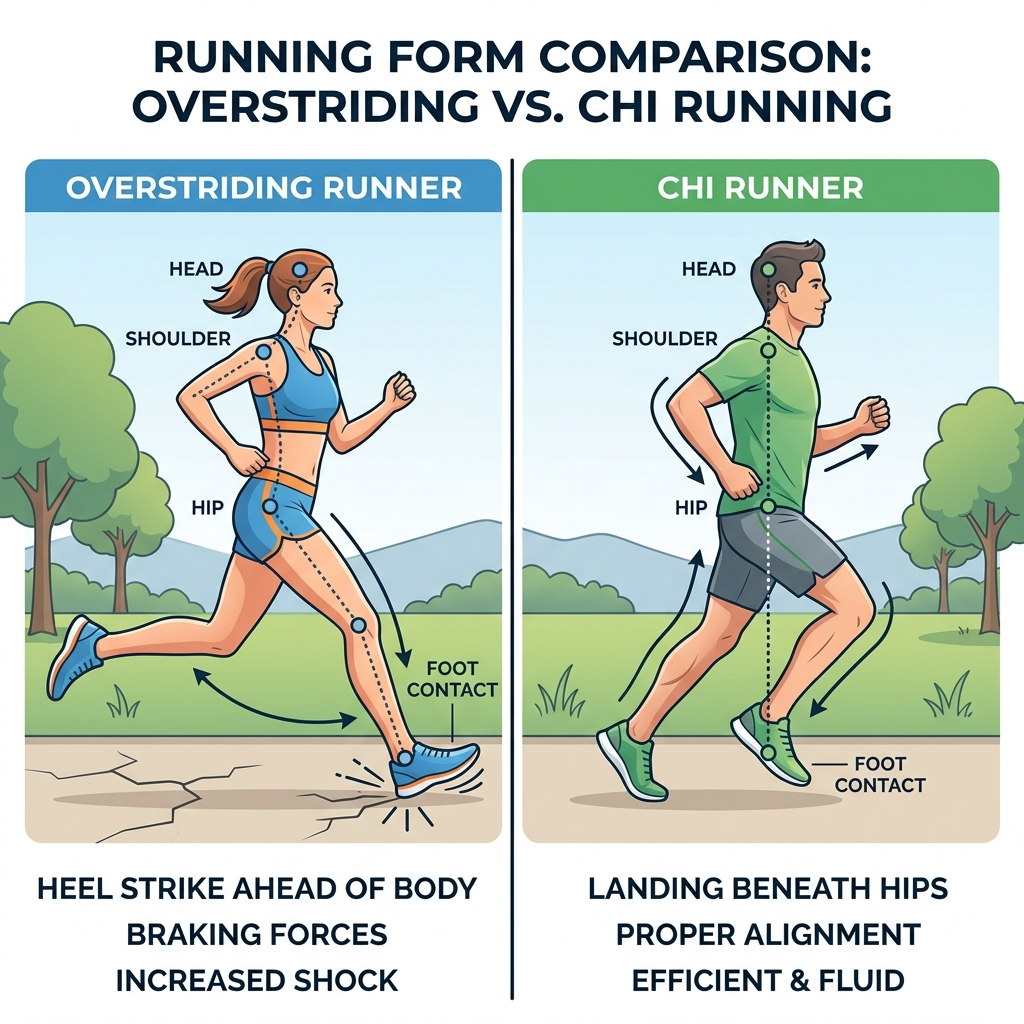
Your head, shoulders, hips and ankles should form a relatively straight line. Rather than slouching or bending at the waist, you aim to stay tall and aligned.
One common problem among recreational runners is overstriding, where the foot lands too far in front of the body. This often results in heel striking and can act as a braking force.
By keeping the foot strike underneath your hips, Chi Running aims to promote smoother forward movement and reduce excessive impact through the legs.
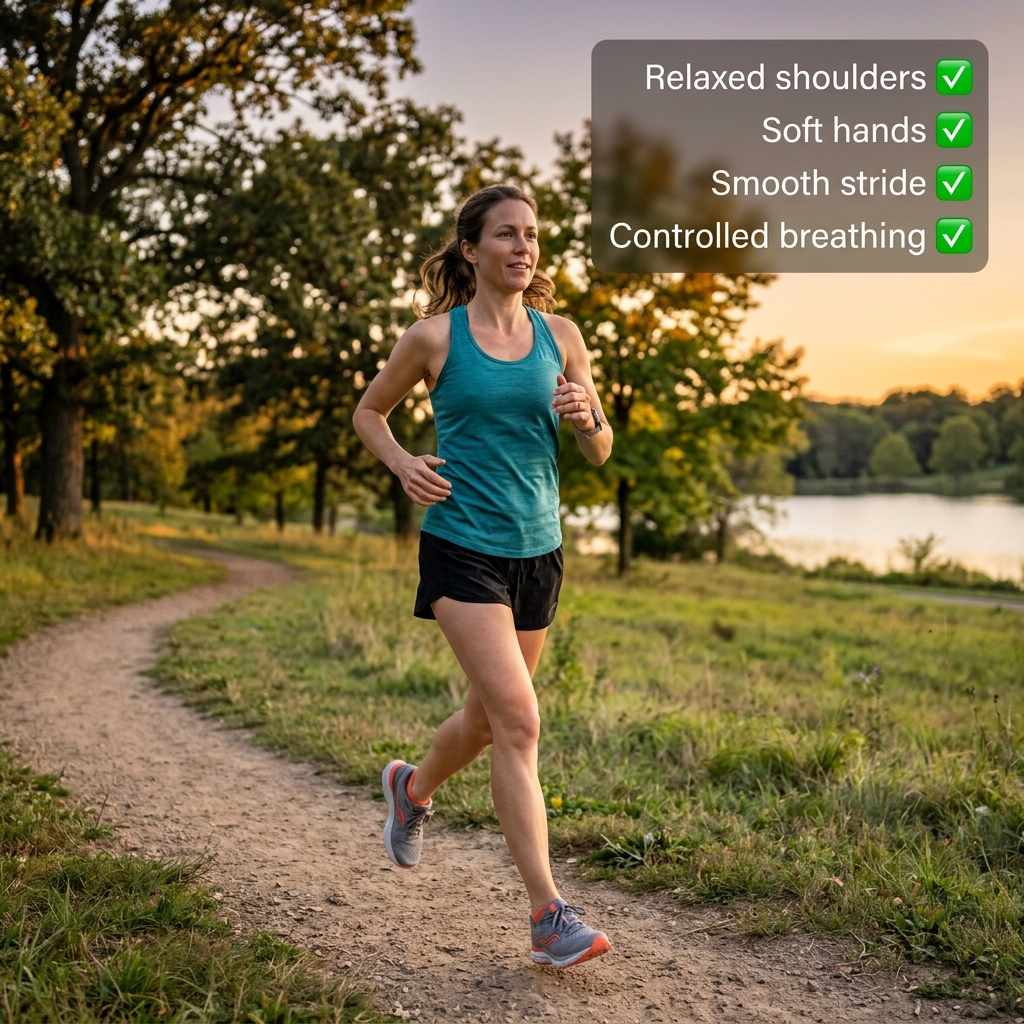
Running Tall Checklist
✅ Head lifted naturally
✅ Relaxed shoulders
✅ Straight spine
✅ Feet landing beneath the body
✅ Eyes focused forward
2. Lean Forward From the Ankles
Perhaps the most distinctive feature of Chi Running is the forward lean.
Rather than bending from the waist, runners lean slightly from the ankles while maintaining a straight line from head to feet.
This creates what Danny Dreyer describes as a controlled forward fall.
The idea is to allow gravity to help create forward momentum instead of relying entirely on muscular effort.
Many runners find this technique unusual at first because it can feel as though they are falling forward. However, when performed correctly, the movement should feel balanced and controlled.
3. Land on the Midfoot
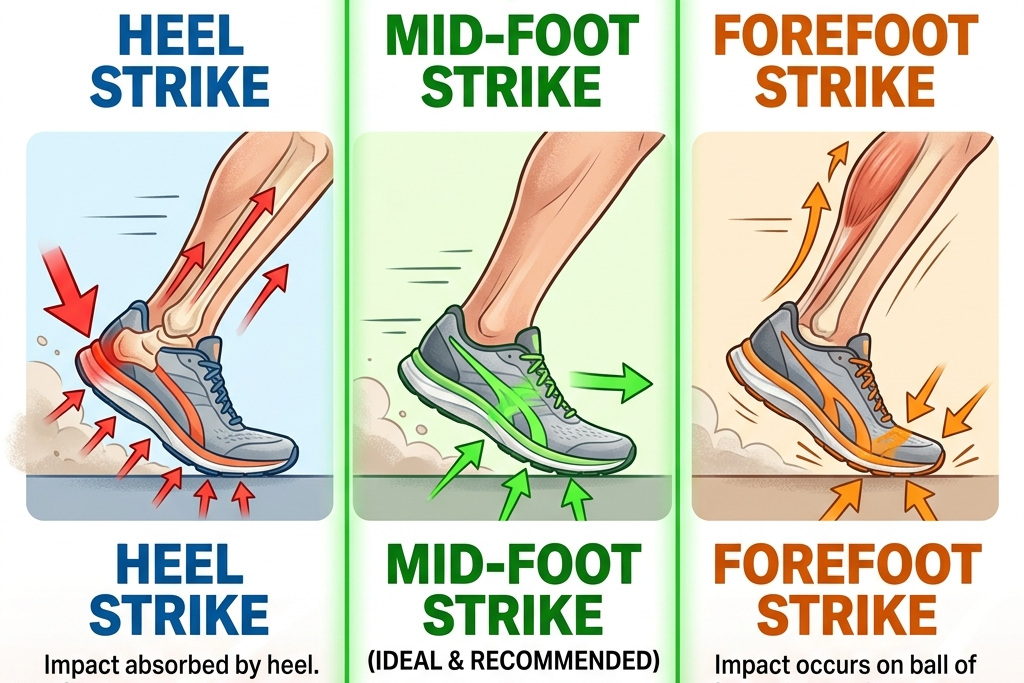
Chi Running encourages a midfoot landing rather than a pronounced heel strike.
The goal is not necessarily to run on your toes but to land smoothly closer to the middle of the foot with the foot positioned beneath your centre of mass.
Supporters of the technique believe this helps:
- Reduce braking forces
- Improve running flow
- Spread impact more evenly through the body
- Encourage shorter strides
It is important to make any changes to foot strike gradually, as sudden adjustments can increase stress on the feet, calves and Achilles tendons.
4. Run From Your Core
Another key principle is using the core as the centre of movement.
Rather than relying solely on leg power, Chi Running encourages runners to develop stability and control through the muscles surrounding the pelvis and trunk.
This often involves maintaining a level pelvis and slight posterior pelvic tilt.
Supporters suggest imagining yourself standing against a wall and gently flattening your lower back. This position helps maintain alignment and encourages a shorter, more efficient stride.
A strong and engaged core provides stability, allowing the arms and legs to move more freely with less tension.
5. Relax Your Body and Mind
Many runners unknowingly carry tension in their:
- Shoulders
- Neck
- Arms
- Hands
- Jaw
Chi Running places huge emphasis on relaxation.
The technique encourages runners to let go of unnecessary muscular tension and maintain a calm, mindful focus throughout the run.
The result is often a smoother, lighter sensation and improved awareness of how the body is moving.
Rather than forcing pace through effort, Chi Running teaches runners to improve efficiency through better technique.
The Benefits of Chi Running
1. May Help Reduce Injury Risk
A large percentage of runners experience injuries each year. While no running method can eliminate injury risk entirely, Chi Running aims to reduce some of the common causes of overuse injuries.
Potential benefits may include reduced stress on:
- Knees
- Hips
- Lower back
- Shins
By encouraging shorter strides, improved posture and more efficient movement patterns, many runners report fewer aches and pains during training.
2. Can Improve Running Efficiency
One of the primary goals of Chi Running is improved running economy.
Running economy refers to the amount of energy required to maintain a given pace.
By:
- Reducing overstriding
- Using gravity effectively
- Maintaining better alignment
- Relaxing unnecessary muscle tension
Runners may find they can maintain their pace with less effort, particularly during longer runs.
3. Strengthens Core Stability
Because the technique emphasises posture and pelvic positioning, the core plays an important role in every stride.
Many practitioners find that regular Chi Running helps improve:
- Postural awareness
- Balance
- Stability
- Functional core strength
These benefits often extend beyond running into everyday activities.
4. Supports a Mindful Running Experience
One of Chi Running's most unique benefits is its focus on mindfulness.
Runners are encouraged to pay attention to:
- Posture
- Breathing
- Foot placement
- Muscle tension
- Body signals
This process of "body sensing" can help runners identify discomfort early and make small adjustments before issues develop into injuries.
Many Chi Runners describe their runs as meditative and mentally refreshing.
5. May Promote Long-Term Running Longevity
Many runners worry that age or previous injuries will eventually force them to stop running.
Chi Running aims to challenge that belief.
By prioritising efficiency and joint-friendly mechanics, the technique may help runners continue enjoying the sport well into later life.
Many older runners are attracted to Chi Running because it focuses on sustainability rather than simply chasing faster times.
Who Is Chi Running Best For?
Chi Running can benefit a wide range of runners, including:
Beginners
Learning good habits from the start can be easier than correcting poor habits later.
Injury-Prone Runners
Those who experience recurring problems may find that changes in technique help reduce unnecessary stress.
Distance Runners
The system's emphasis on efficiency can be particularly appealing to marathon and ultramarathon runners.
Older Runners
Many ageing runners appreciate the focus on joint protection and sustainable movement.
How Long Does It Take to Learn?
Like any movement skill, Chi Running requires practice.
Most runners can understand the basic concepts within a few sessions, but developing the technique into a natural running style often takes several months of consistent application.
The process is gradual, and improvements usually come from making small adjustments over time rather than completely changing your running overnight.
What Does the Science Say?
Research into foot strike patterns and running biomechanics provides some support for several principles used in Chi Running.
Studies have found that forefoot and midfoot striking can reduce impact loading rates and lower stress around the knee compared with rearfoot striking. However, these techniques may also increase loading on the ankle and Achilles tendon.
Research has also shown that modifying running mechanics can influence how forces are distributed throughout the body. This suggests that no single running style is universally superior. Instead, different techniques shift stress between different structures.
Current evidence suggests that runners should approach form changes gradually and consider individual factors such as injury history, mobility and strength.
PubMed Research Highlights
Several findings from published research are relevant to Chi Running:
Running-Related Injuries Are Common
Research has reported running-related injury rates ranging from approximately 19% to nearly 80% among runners, highlighting the importance of injury prevention strategies.
Foot Strike Influences Impact Forces
Studies suggest that midfoot and forefoot striking may reduce impact loading rates compared with traditional rearfoot striking.
Knee and Ankle Loads Differ
Research indicates that rearfoot striking tends to place greater stress on the knee, while forefoot striking can increase demands on the ankle and Achilles tendon.
Running Technique Matters
Biomechanical studies support the idea that changes in posture, stride length and landing mechanics influence how forces move through the body.
More Research Is Needed
While some aspects of Chi Running align with current biomechanical research, further studies specifically evaluating Chi Running as a complete system are still required.
Takeaway
Chi Running offers a unique blend of running technique, mindfulness and body awareness. By encouraging upright posture, a slight forward lean, core-driven movement, midfoot landing and relaxation, it aims to make running feel smoother and more efficient.
Although it is not a guaranteed solution to injuries, many runners find that Chi Running helps them move more comfortably, stay consistent with training and enjoy running more. Like any running skill, success comes from patience, gradual practice and listening to your body throughout the learning process.
❓ FAQ: Asian Pilates Flow: Chi Running
Is Chi Running suitable for beginners?
Yes. Many beginners find Chi Running easier to learn before developing long-standing running habits.
Does Chi Running guarantee injury-free running?
No. No running technique can guarantee injury prevention. However, Chi Running aims to reduce unnecessary stress on the body through more efficient movement patterns.
Can Chi Running make me faster?
Potentially. Many runners report improved efficiency, which can lead to better performance over time. However, speed improvements usually occur gradually as technique develops.
Do I need special shoes for Chi Running?
No. Most runners can begin practising Chi Running in their current running shoes. Some eventually prefer lighter, lower-drop shoes, but special footwear is not required.
Is Chi Running the same as barefoot running?
No. While both often encourage a midfoot strike and shorter strides, Chi Running is a complete movement system that also focuses on posture, core engagement, relaxation and mindfulness.
How often should I practise Chi Running?
Start by incorporating the principles into one or two runs per week. Gradual practice allows your body to adapt more safely.
Is Chi Running good for marathon training?
Many marathon and ultramarathon runners use Chi Running because it focuses on efficiency and conserving energy over long distances.
Can older runners benefit from Chi Running?
Yes. The technique's emphasis on posture, alignment and reduced impact makes it particularly appealing for runners who want to continue running for many years.
This content is for educational purposes and does not replace medical advice…
About the author
Lilla Fonyo is a healthy lifestyle and longevity writer with a background in endurance running, nutrition, and mindful living. She focuses on sustainable habits that support long-term physical and mental wellbeing.
Sources:
www.chiliving.com - The Benefits of ChiRunning: Run Farther, Feel Better, and Stay Injury-Free
www.marathonhandbook.com - Chi Running: 5 Technique Elements + How to Practice
www.hfe.co.uk - The principles and benefits of chi running
www.jointhealth.com.au - Discover the ease of Chi Running
www.pmc.ncbi.nlm.nih.gov - Effects of Foot Strike Techniques on Running Biomechanics: A Systematic Review and Meta-analysis
www.runandbecome.com - What is Chi Running?