Strong Legs, Strong Heart:
The Best Leg Exercises for Better Heart Health
By Lilla Fonyo — Healthy Lifestyle & Longevity Writer
September 2026
Quick Summary
Think heart health is all about walking, running, or cycling? Think again. Strong leg muscles play a vital role in supporting your cardiovascular system. Because your legs contain some of the largest muscle groups in your body, exercising them helps improve circulation, lower blood pressure, enhance blood sugar control, and make everyday movement easier. When combined with regular aerobic activity, leg strengthening exercises can help you build a stronger, healthier heart while improving balance, mobility, and overall fitness.
Related Articles:
Strength Training for Over 40s: Build Muscle & Protect Health - Strength training for over 40s made simple. Build muscle, protect bones, boost heart health and stay strong with expert-backed advice.
The Benefits of Squats: Why You Should Add Them to Your Routine - Learn why squats matter, which muscles they work, how to squat safely, and the top benefits for strength, mobility and injury prevention.
How Strength Training Boosts Brain Power - Discover how strength training improves memory, focus, and brain health while reducing stress and boosting mental performance.
Step Aerobics Benefits: Why Step Workouts Are Great for Weight Loss, Strength, and Heart Health - Discover step aerobics benefits for weight loss, heart health and fitness — now with expert advice, backed by NHS guidance and research.
Low-Impact Exercise - Gentle Movement That Still Gets Results - Discover the benefits of low-impact exercise and how gentle workouts can improve strength, mobility, mood and long-term health.
Asian Pilates: The Gentle Fitness Trend - Discover Asian Pilates — a mindful blend of classical Pilates, Tai Chi, and yoga that builds strength, balance, and inner calm.
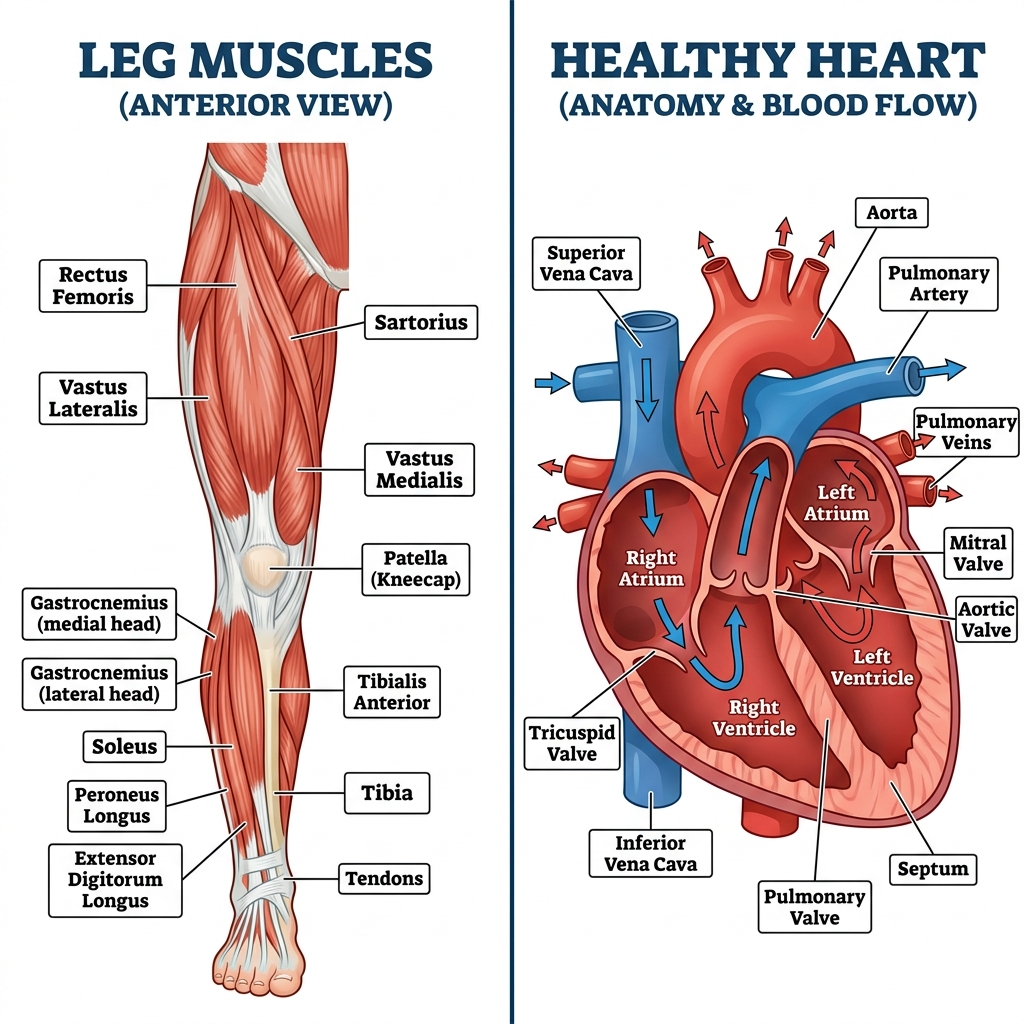
Why Leg Exercises Matter for Heart Health
When most people think about heart-friendly exercise, they picture activities such as jogging, swimming, or brisk walking. While these exercises are excellent for cardiovascular fitness, leg strengthening deserves equal attention.
Your legs contain powerful muscles including the quadriceps, hamstrings, glutes, and calves. Every time these muscles work, they demand more oxygen-rich blood from your heart. Over time, this challenges and strengthens your cardiovascular system, helping your heart pump blood more efficiently.
Strong leg muscles also act as a "second pump", helping blood return from your legs back to your heart. Better circulation can support healthy blood pressure, improve vascular health, and reduce strain on the heart.
Research has even suggested that stronger quadriceps may be associated with a lower risk of developing heart failure after a heart attack, highlighting the close relationship between leg strength and cardiovascular health.
The Connection Between Leg Strength and Heart Health
Building stronger legs offers several heart-related benefits:
✅ Improves blood circulation
✅ Helps control blood pressure
✅ Enhances insulin sensitivity
✅ Supports healthy cholesterol levels
✅ Makes aerobic exercise easier and more effective
✅ Improves mobility and independence
✅ Reduces fall risk and injury risk
✅ Encourages long-term physical activity
Simply put, stronger legs help you stay active, and staying active is one of the best things you can do for your heart.
The Best Leg Exercises for Heart Health
1. Walking
Why it's great
Walking remains one of the safest and most effective exercises for improving heart health. It increases heart rate, strengthens leg muscles, improves circulation, and is accessible for almost everyone.
How to do it
Aim for a brisk pace where you feel warm and slightly out of breath but can still hold a conversation.
Goal
Work towards 150 minutes of moderate-intensity walking each week.
2. Stair Climbing
Why it's great
Climbing stairs combines aerobic exercise with lower-body strength training. It raises your heart rate quickly while strengthening your thighs, glutes, and calves.
How to do it
Use stairs at home, work, or in public places. Start with one or two flights and gradually increase.
Heart benefit
Improves cardiovascular endurance and burns calories efficiently.
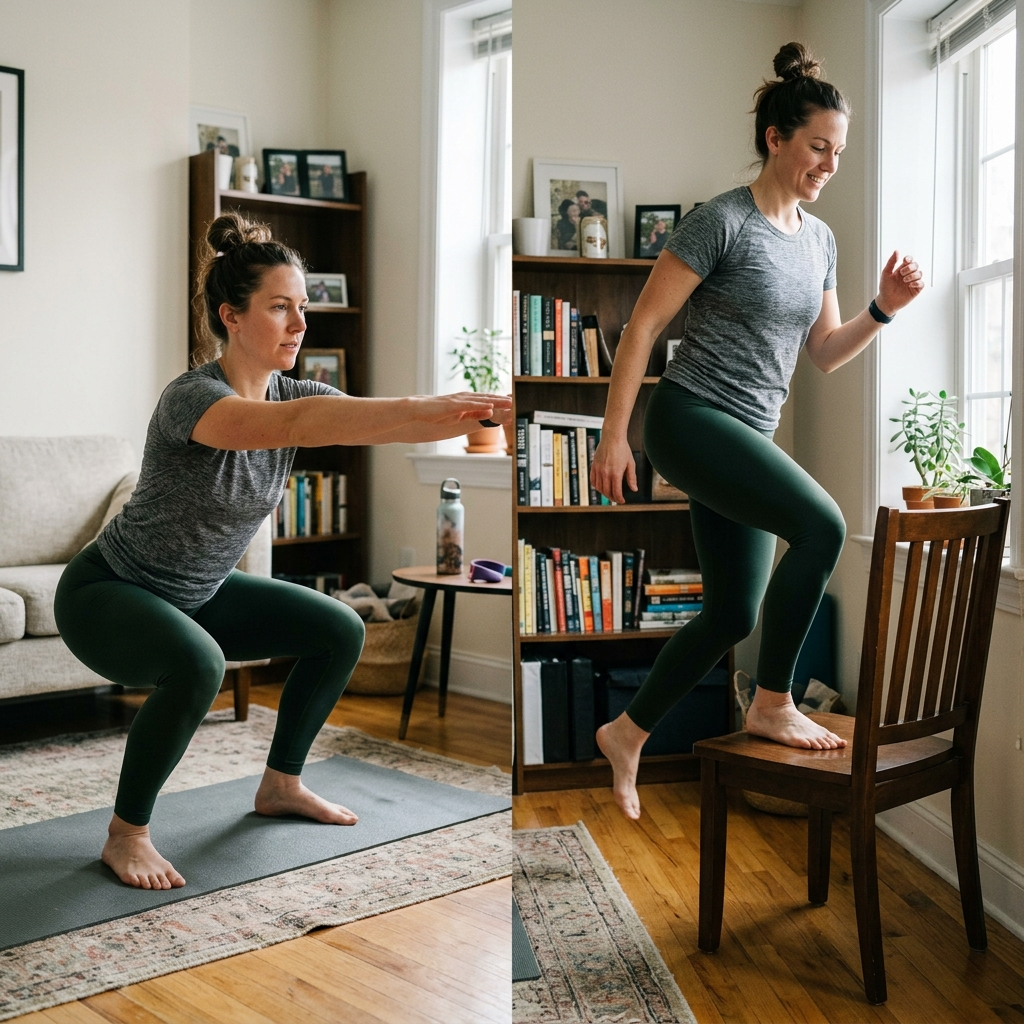
3. Squats
Why they're great
Squats work some of the largest muscle groups in the body simultaneously, helping build strength while increasing cardiovascular demand.
How to do it
- Stand with feet shoulder-width apart.
- Lower your hips as though sitting into a chair.
- Keep your chest up.
- Push through your heels to stand.
Recommended
2-3 sets of 8-12 repetitions.
4. Step-Ups
Why they're great
Step-ups mimic daily activities such as climbing stairs and improve stability, coordination, and endurance.
How to do it
- Step onto a sturdy platform.
- Push through your leading heel.
- Bring the other foot up.
- Step back down with control.
Recommended
8-12 repetitions on each leg.
5. Walking Lunges
Why they're great
Lunges improve balance, mobility, muscle endurance, and lower-body strength.
How to do it
- Take a step forward.
- Lower until both knees reach approximately 90 degrees.
- Push forward into the next step.
Heart benefit
Works multiple muscle groups simultaneously, increasing oxygen demand and circulation.

6. Sit-to-Stand Exercise
Why it's great
This simple movement is particularly beneficial for older adults and beginners.
How to do it
- Sit on a sturdy chair.
- Stand without using your hands.
- Slowly sit back down.
Heart benefit
Builds functional leg strength that supports everyday activities and encourages greater physical activity.
7. Glute Bridges
Why they're great
Bridges strengthen the glutes, hamstrings, and core while improving hip stability.
How to do it
- Lie on your back with knees bent.
- Lift your hips until your body forms a straight line.
- Hold briefly and lower slowly.
Recommended
8-10 repetitions for 2-3 sets.
8. Heel Raises
Why they're great
Often overlooked, calf muscles play an important role in blood circulation.
How to do it
- Stand upright.
- Rise onto your toes.
- Pause briefly.
- Lower slowly.
Recommended
8-12 repetitions for 1-3 sets.
9. Cycling
Why it's great
Cycling is gentle on the joints while providing an excellent workout for both the heart and legs.
Particularly suitable for
- Older adults
- Beginners
- People with joint pain
- Those returning to exercise
Heart benefit
Improves cardiovascular fitness while strengthening major lower-body muscles.
10. Split Squats
Why they're great
Split squats challenge balance and strengthen each leg independently.
How to do it
- Step one foot behind you.
- Lower into a controlled squat.
- Return to standing.
Benefit
Builds leg strength, coordination, and stability.
Don't Forget Aerobic Exercise
Leg exercises are incredibly beneficial, but they should complement, not replace, cardiovascular exercise.
For optimal heart health, aim for:
- At least 150 minutes of moderate aerobic activity per week
- Strength training 2-3 times per week
- Balance and flexibility exercises 2-3 times per week
A combination of walking, cycling, swimming, strength training, stretching, and balance work provides the greatest overall benefit.
Exercise Safely if You Have a Heart Condition
If you have a heart condition, exercise can still be extremely beneficial, but it's important to speak with your GP, cardiologist, or cardiac rehabilitation team before starting a new programme.
Particular care may be needed if you:
- Have heart failure
- Have recently had a heart attack
- Have undergone heart surgery
- Experience angina
- Have peripheral arterial disease (PAD)
Starting slowly and progressing gradually is often the safest approach.
What the British Heart Foundation Says
The British Heart Foundation (BHF) strongly supports regular physical activity for people living with heart and circulatory conditions. According to BHF guidance:
- Aerobic exercise helps the heart and circulatory system work more efficiently.
- Strength training makes everyday movement easier and reduces the demand placed on the heart.
- Balance and flexibility exercises reduce injury risk and help people remain active for longer.
- Most adults should aim for at least 150 minutes of moderate-intensity aerobic exercise each week.
- Muscle-strengthening activities should be included at least twice weekly.
The BHF also highlights the importance of warming up before exercise and cooling down afterwards, especially for people with heart or circulatory conditions.
Takeaway
Heart health isn't built through cardio alone. Strong legs support a strong heart by improving circulation, helping regulate blood pressure, enhancing blood sugar control, and making physical activity easier. Walking, stair climbing, squats, step-ups, lunges, cycling, and other lower-body exercises can significantly improve both cardiovascular fitness and overall wellbeing. The best results come from combining regular aerobic activity with consistent leg-strengthening exercises and maintaining a routine you can enjoy long term.
❓FAQ: Best Leg Exercises for Heart Health
Are leg exercises good for heart health?
Yes. Leg exercises work some of the largest muscles in your body, increasing blood flow, improving circulation, and helping your heart work more efficiently.
Can leg strength reduce heart disease risk?
While leg strength alone does not prevent heart disease, stronger leg muscles support greater physical activity, better blood sugar control, healthier blood pressure, and improved cardiovascular fitness.
Which leg exercise is best for the heart?
Walking is often considered one of the best overall exercises because it combines cardiovascular training with leg strengthening and is suitable for most fitness levels.
How often should I train my legs for heart health?
Aim for 2-3 dedicated strength sessions per week alongside at least 150 minutes of moderate aerobic exercise.
Is stair climbing good for heart health?
Absolutely. Stair climbing combines resistance training and aerobic exercise, making it highly effective for improving cardiovascular fitness and leg strength.
Can people with heart conditions do leg exercises?
In most cases, yes. However, anyone with a heart condition should seek advice from a healthcare professional before beginning a new exercise programme.
Are squats safe for older adults?
Squats can be safe and very beneficial when performed with proper technique. Chair squats or sit-to-stand exercises are excellent beginner-friendly alternatives.
Do stronger legs improve circulation?
Yes. Strong leg muscles help pump blood back towards the heart, supporting healthy circulation and vascular function.
This content is for educational purposes and does not replace medical advice...
About the author
Lilla Fonyo is a healthy lifestyle and longevity writer with a background in endurance running, nutrition, and mindful living. She focuses on sustainable habits that support long-term physical and mental wellbeing.
Sources:
www.bhf.org.uk - Best exercises for heart health
www.health.harvard.edu - Building stronger legs
www.ndtv.com - These Leg Workouts Can Improve Your Cardiovascular Health, Expert Explains
www.timesofindia.com - 10 basic leg exercises for stronger heart
www.everlywell.com - 8 Simple Exercises for Heart Health—No Equipment Needed