Step Aerobics Benefits:
Why Step Workouts
Are Great for
Weight Loss, Strength, and Heart Health
By Lilla Fonyo — Healthy Lifestyle & Longevity Writer
Last Update February 2026
Quick Summary
Step aerobics is a classic workout that combines cardio exercise with strength training using a raised platform. It helps burn calories, strengthen muscles, improve balance, and support heart health — all without requiring complicated equipment. Suitable for beginners and experienced exercisers alike, step workouts can be adapted to different fitness levels and goals. Research and health experts agree that regular aerobic movement like step training can improve overall fitness, mobility, and long-term wellbeing.
Combining Cardio and Strength Training - Discover how mixing cardio and strength training helps you burn fat, build muscle, and boost fitness for faster, lasting results.
Cardio Exercises – Benefits - Aerobic exercise refers to activities that elevate your heart rate and engage large muscle groups, collectively known as cardiovascular activity.
The Benefits of Squats: Why You Should Add Them to Your Routine - Learn why squats matter, which muscles they work, how to squat safely, and the top benefits for strength, mobility and injury prevention.
What Is Step Aerobics?
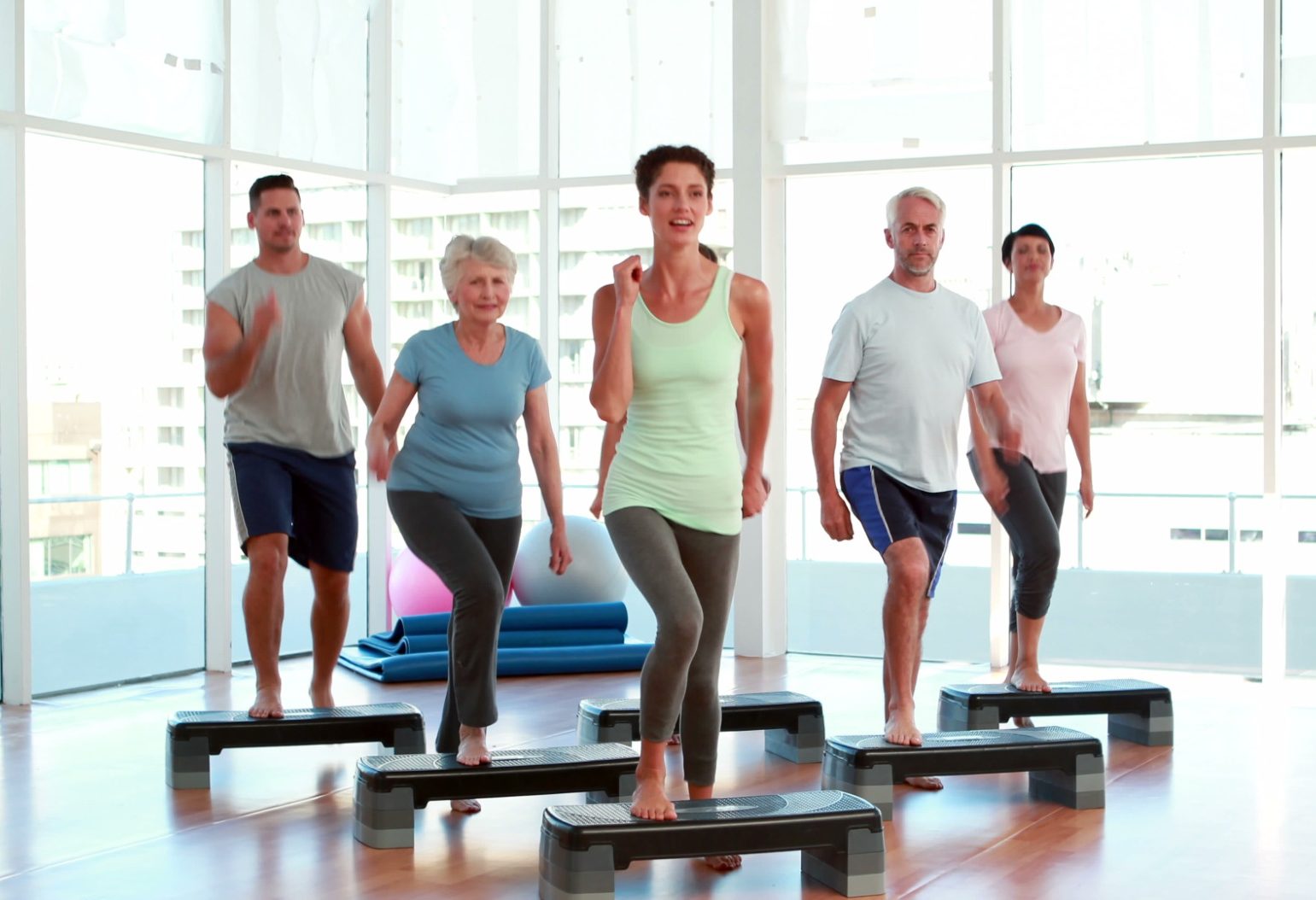
Step aerobics is an energetic workout that involves stepping up and down from a raised platform in rhythmic patterns. Originally popularised in group fitness classes, it remains widely loved because it is simple, effective, and surprisingly enjoyable.
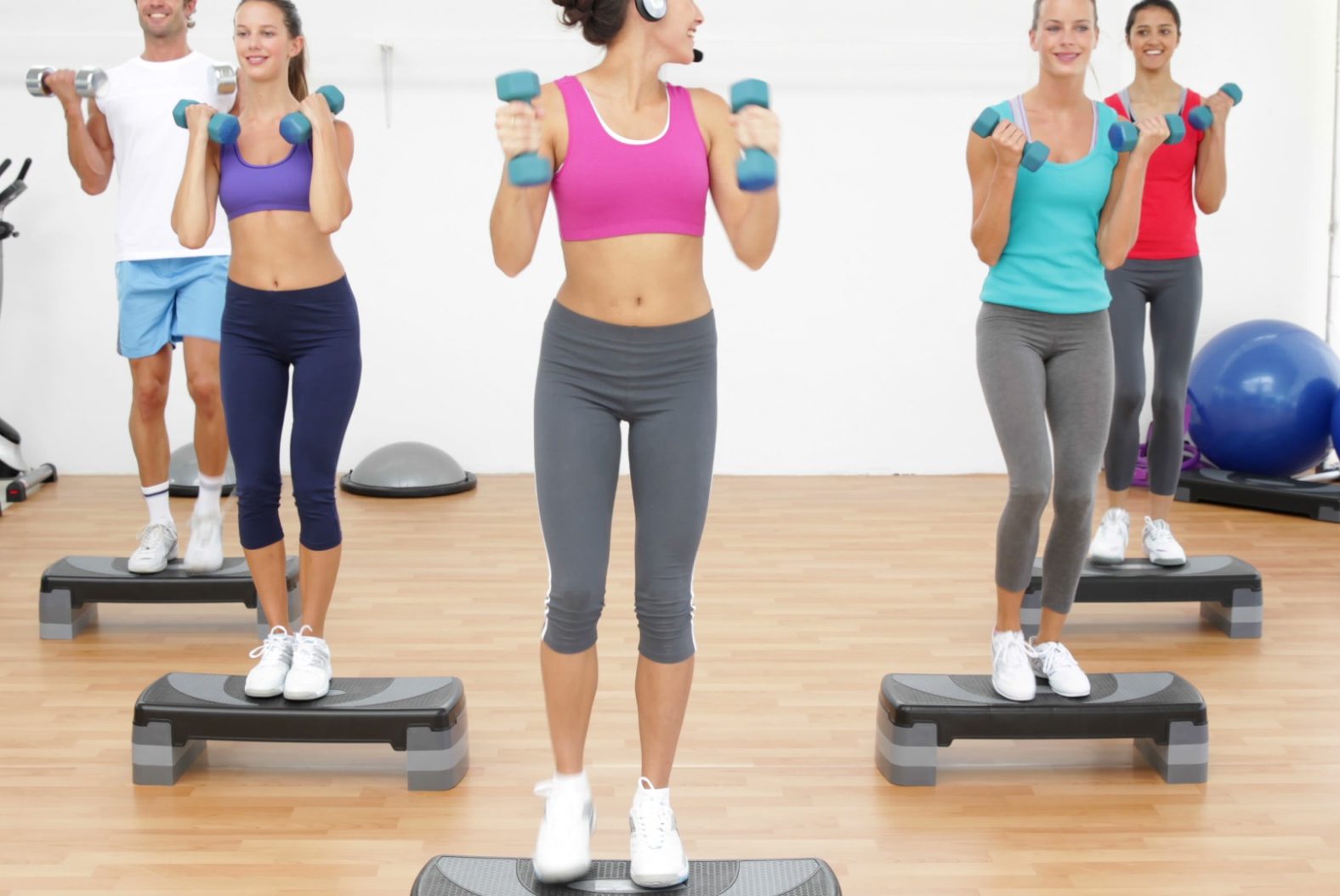
The height of the step and the speed of movement determine how challenging the workout feels. Some sessions focus mainly on cardiovascular fitness, while others include light weights or resistance bands to add strength training.
Because movements can be adjusted easily, step aerobics works well both at home and in group classes.
Why Step Aerobics Works So Well
Step workouts combine two important elements of fitness:
Aerobic exercise, which raises your heart rate and improves endurance
Muscle strengthening, especially for the lower body and core
By engaging large muscle groups repeatedly, the body burns energy efficiently while also improving coordination and stability.
Common Types of Step Movements
One reason step aerobics stays interesting is the variety of movements available. Popular exercises include:
Tap Up – stepping onto the platform and tapping the opposite foot
Grapevine – a dance-style sideways movement improving coordination
Repeater Knees – repeated knee lifts for strength and balance
A, I and V Steps – patterned footwork that challenges rhythm and agility
Beginners can start slowly and gradually increase complexity as confidence improves.
⚠️ Always consult a healthcare professional before starting if you have joint pain, arthritis, or balance concerns.
Key Benefits of Step Aerobics
1. Supports Weight Loss
A moderate session can burn roughly 300–400 calories per hour, depending on intensity. Because it combines cardio and resistance work, step aerobics is particularly effective for fat loss.
2. Improves Heart Health
Regular aerobic exercise strengthens the heart and improves circulation, helping reduce the risk of cardiovascular disease.
3. Builds Muscle and Bone Strength
Stepping movements load the legs and hips, helping maintain muscle mass and supporting bone density — especially important as we age.
4. Boosts Mental Wellbeing
Like many rhythmic exercises, step workouts release endorphins, which may help reduce stress and improve mood and energy levels.
5. Strengthens the Lower Body
Calves, thighs, glutes, and core muscles work continuously during step training, improving balance and stability.
6. Increases Metabolism
Regular exercise helps the body burn calories more efficiently, even at rest.
7. Can Be Low Impact
Unlike jumping workouts, step aerobics often keeps one foot grounded, reducing stress on joints when performed with good technique.
8. Requires Minimal Equipment
A sturdy step platform and comfortable trainers are usually all you need.
9. Suitable for Many Fitness Levels
You can start with a low step height and simple movements, then gradually increase intensity.
What the NHS Says About Step-Style Exercise
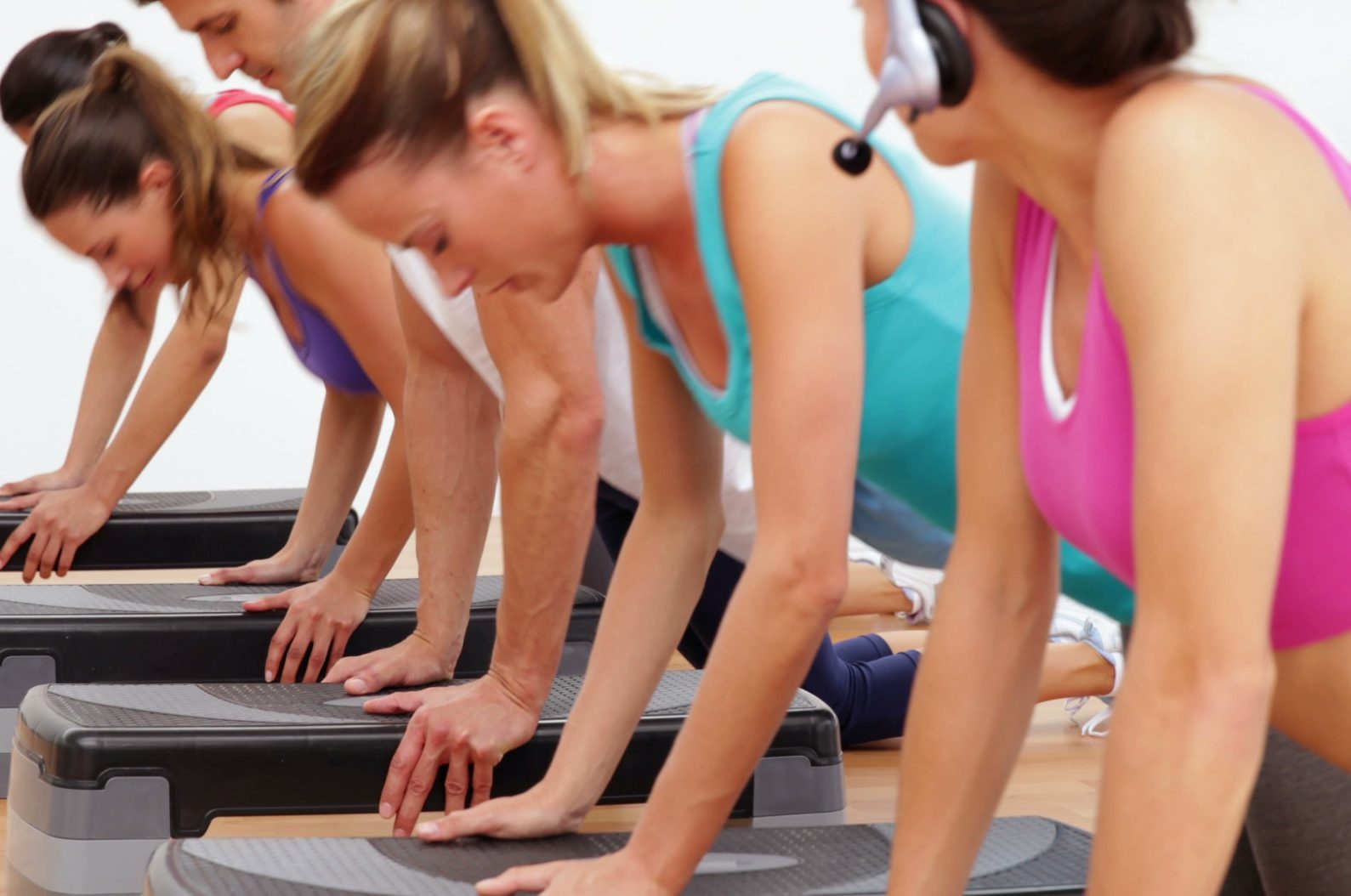
Guidance from the NHS highlights the importance of exercises that improve balance, strength, and mobility, particularly as people get older. Movements similar to step aerobics — such as controlled step-ups, sideways walking, and balance exercises — help maintain independence and reduce fall risk.
The NHS recommends building activity gradually, exercising regularly each week, and focusing on controlled movement and good posture. Step-based exercises fit well within these recommendations because they strengthen muscles while improving coordination and stability.
Scientific Evidence: What PubMed Research Shows
Scientific studies published on PubMed provide strong support for step aerobics as an effective form of exercise.
One study examining 12 weeks of step aerobics training in older women found significant improvements in strength, flexibility, balance, and cardiovascular fitness. Participants who trained three times weekly showed measurable gains in functional fitness, highlighting step aerobics as a valuable tool for maintaining mobility with age.
Another clinical study involving postmenopausal women with low bone mass reported improvements in functional fitness and positive changes in bone metabolism after a structured step aerobics programme. Researchers suggested that group-based step exercise may help support bone health and overall wellbeing in ageing populations.
Together, these findings indicate that step aerobics is not only a fitness trend but also a scientifically supported activity that promotes long-term physical function.
How to Start Step Aerobics Safely
If you are new to step workouts:
Begin with a low platform (around 3–4 inches)
Focus on learning footwork before adding arm movements
Keep your posture upright and engage your core
Step softly to reduce joint stress
Increase intensity gradually
You can practise basic step-ups at home before joining a class.
Is Step Aerobics Right for You?
Step aerobics is ideal for people who:
✔ Want an effective home workout
✔ Enjoy rhythmic or dance-style exercise
✔ Want to improve heart fitness and strength together
✔ Prefer adaptable workouts
It may be less suitable for individuals with significant knee, hip, or balance problems without medical guidance.
Takeaway
Step aerobics remains popular for a reason — it delivers real results in a simple, enjoyable way. By combining cardio exercise with muscle strengthening, it supports weight management, heart health, mobility, and mental wellbeing. Research shows it can improve functional fitness and help maintain strength as we age. Whether performed in a lively class or at home, step workouts offer a practical and accessible path towards better long-term health.
❓ FAQ – Step Aerobics Benefits
Is step aerobics good for beginners?
Yes. You can start with basic movements and a low step height, making it suitable for most fitness levels.
Can step aerobics help with weight loss?
Yes. Regular sessions burn calories and increase overall activity levels, supporting healthy weight management.
Is step aerobics bad for the knees?
When performed with correct form and controlled movements, it is generally low impact. Avoid excessive jumping and adjust the step height if needed.
Can older adults do step aerobics?
Yes. Studies show it can improve balance, strength, and mobility, though intensity should be adjusted appropriately.
Do I need special equipment?
Only a stable step platform and supportive footwear are required.
How often should I do step aerobics?
Most experts recommend 2–4 sessions per week alongside strength and flexibility exercises.
🌿 From Ana’s Training Floor
Coach’s Corner
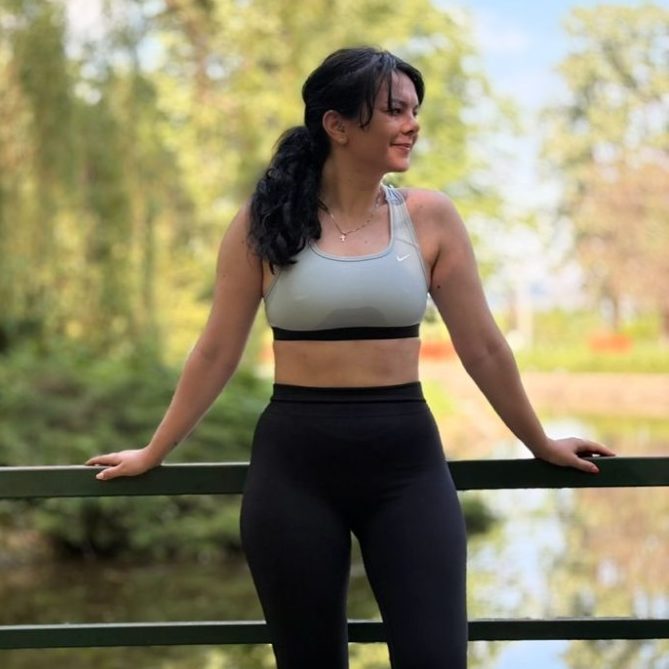
“As a personal trainer, I usually recommend 2–3 step sessions per week, especially for beginners. While some experts suggest up to four sessions, this can be too much for many people — particularly if the classes are high intensity or include repeated knee loading.
Even though step aerobics is often considered low impact, the repeated stepping movement still places stress on the knees. That’s why recovery and proper technique are essential.
With my additional qualification in Exercise to Music (ETM) Step, I use step training as one tool within a balanced programme — not as the only form of exercise.
When programmed correctly, step can improve cardiovascular fitness, lower body strength, coordination, and muscular endurance at the same time. The key is progression.
For beginners, I always focus first on movement quality — correct knee alignment, controlled stepping down, and steady breathing. Step can be low impact, but only when performed with control and good technique.
In my classes, I see how music and group energy help people stay consistent. And over time, consistency is what truly creates lasting results for heart health, strength, and overall fitness.”
— Ana Sofronea, Level 3 Personal Trainer & ETM Step Specialist
This reinforces that step training works best when programmed progressively and performed with control.
This content is for educational purposes and does not replace medical advice…
About the author
Lilla Fonyo is a healthy lifestyle and longevity writer with a background in endurance running, nutrition, and mindful living. She focuses on sustainable habits that support long-term physical and mental wellbeing.
This article was reviewed by our PT expert, Ana Sofronea, Certified Personal Trainer (Level 3).
Sources:
www.medicinenet.com - What Is Step Exercise Good For?
www.healthline.com - Get a Step Aerobics Routine Started
www.webmd.com - Step Aerobics
www.nhs.uk - Balance exercises
www.pubmed.ncbi.nlm.nih.gov - The effects of 12 weeks of step aerobics training on functional fitness of elderly women
www.pubmed.ncbi.nlm.nih.gov - Effects of short-term step aerobics exercise on bone metabolism and functional fitness in postmenopausal women with low bone mass